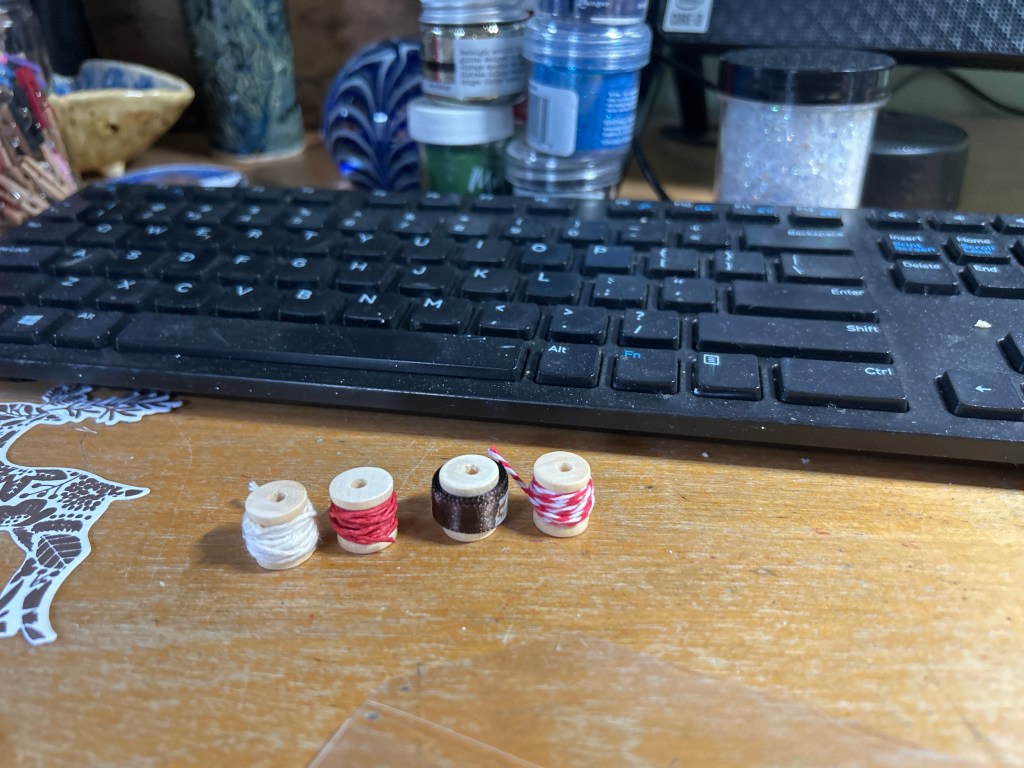
This year, instead of buying a Thanksgiving host gift, I decided to make one. I’ve been thinking a lot about using what I already have, and with so many stamps, dies, and bits of ribbon tucked away in my craft room, it felt like the right moment to create something special without starting from scratch. To be honest, the entire project was sparked by a tiny new addition to my stash — a bag of miniature wooden spools I ordered from Amazon. I was so tickled by them that I knew immediately they needed to be part of a gift. Around the same time, I watched a Stamp Market video about putting together little curated boxes, and that idea stuck with me. Once I lined up those little spools wrapped in twine and ribbon, the whole concept for a holiday tag kit began to take shape.
It turned into one of the most joyful creative afternoons I’ve had in a long time.
Hand-Stamped Botanical Panels
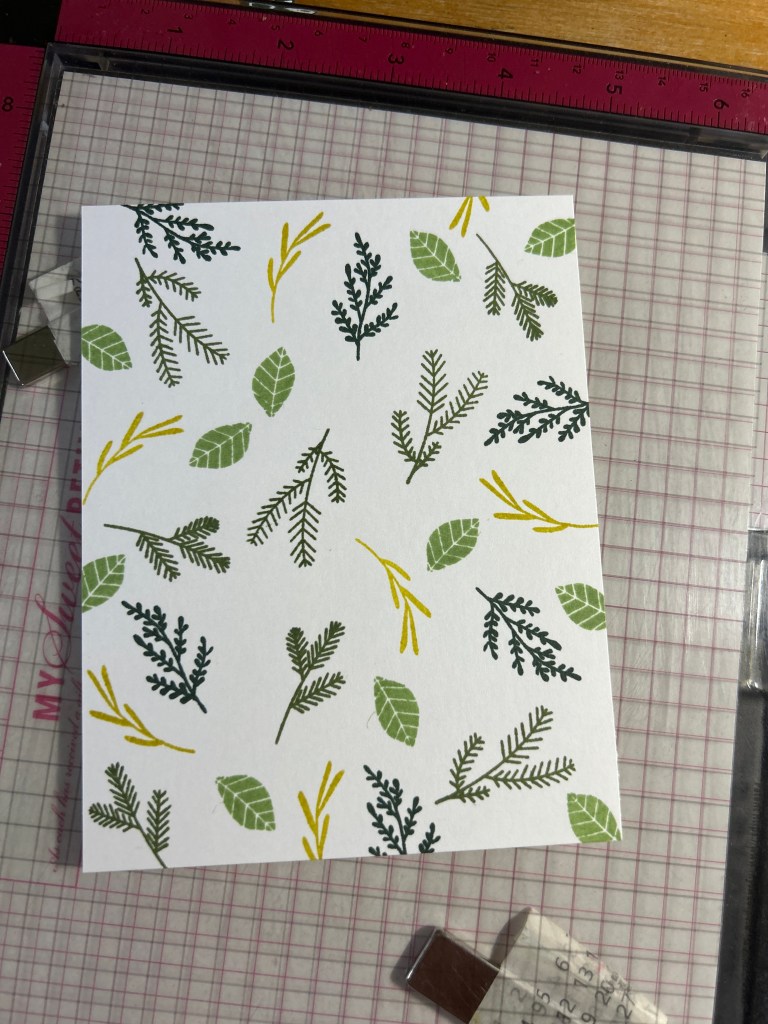
I started by pulling out Paper Tray Ink’s Floral Fantasy: Christmas stamp set and stamped three different botanical panels in soft greens, a blush pink, and a warm Cashmere brown. I forgot how much I love building my own patterned paper, especially since I seriously expanded my ink collection this past year. These panels ended up becoming the foundation for the tags.
The Tags
For the actual tags, I used The Stamp Market’s Circle Tags Die — it’s the one with forty-nine different shapes (well, it feels like it), and every time I use it I wonder why on earth I have forty-nine tag shapes… but then I fall in love with it all over again.
I cut both patterned and solid tags and added reinforcers (my AI muse told me I should take the extra step and do this even though it is so tedious!). I also stamped a simple “to/from” on the backs.
It already felt like a little collection.
Curating the Accessories
Then came the fun part: building out the little compartments in the box.
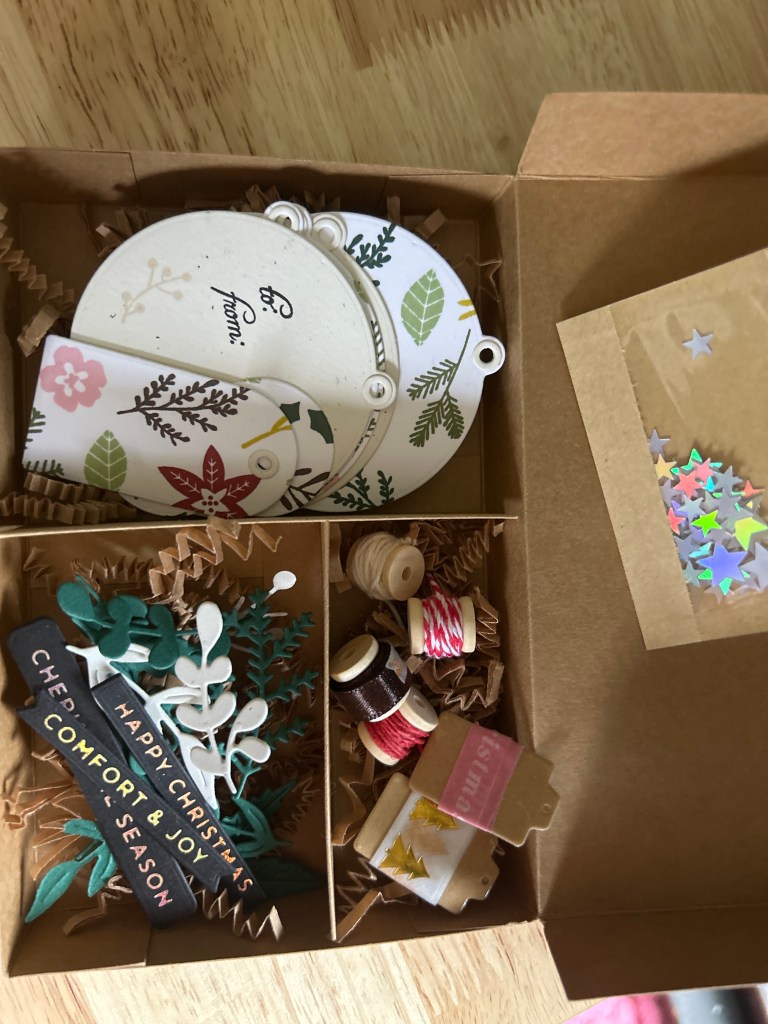
In the lower left, I added sprigs cut from two sets:
– The Stamp Market – Sprigs (the clean white and green botanicals)
– Frantic Stamper – Wreath and Swag Components (smaller greenery to tuck in)
I wrapped tiny wooden spools with baker’s twine and fancy satin ribbon from May Arts and nestled them into their own section lined with kraft crinkle shred. They look like miniature treasures.
I made two washi sample cards using a Stamp Market tag that I covered in packing tape first and then die cut. My only hot tip is to put a piece of copy paper underneath it when you die cut as it will cut out more cleanly. These add just the right amount of shine.
I also created a tiny packet of holographic stars and taped it to the inside of the lid, which adds a little sparkle when the box opens.
Finally, I tucked in a few foiled sentiment strips that I added tape to on the back so they could be easily used from my stash — “Comfort & Joy,” “Happy Christmas,” “Cheer,” and “Season.” They fit the botanical palette beautifully.
The Final Touches
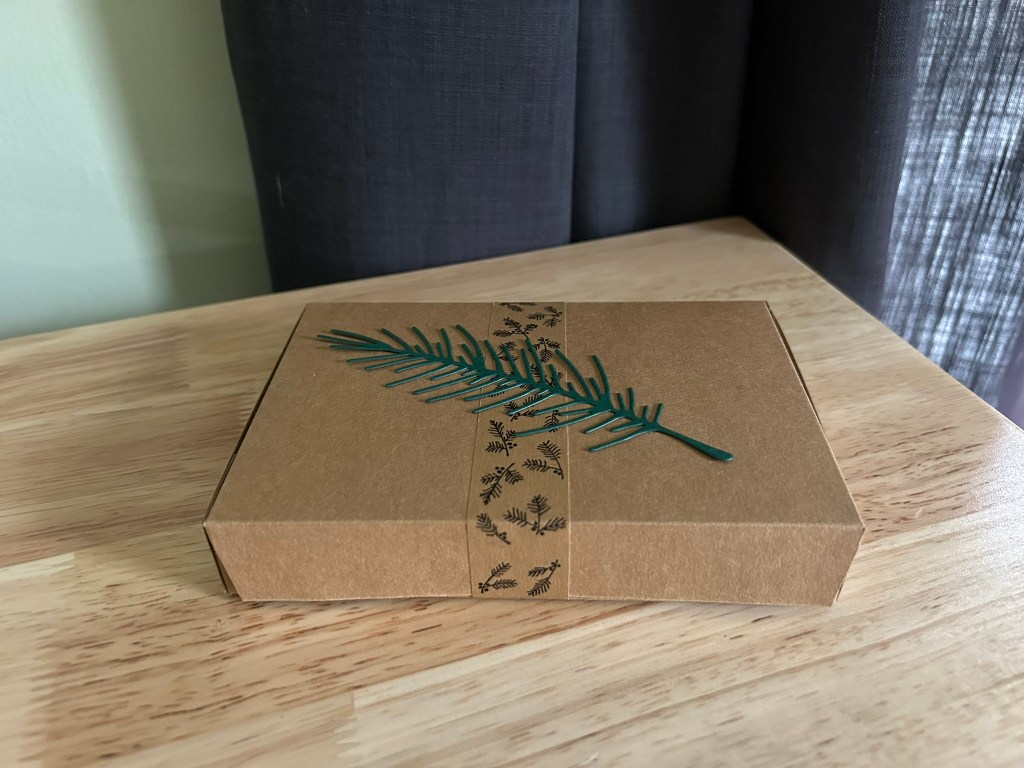
For the top of the box, I added a single pine branch cut from The Greetery’s Big Branches: Pine die. It’s simple, clean, and matches the whole tone of the kit.
A Meaningful, Handmade Gift
All told, it took me about two and a half hours, some of that spent making decisions, but it’s exactly the kind of gift I love to give. Something useful. Something handmade. Something beautiful. Something that reflects the time and thought that went into it.
I’m so happy with how this turned out, and I already want to make another.
Supplies Used
Stamps
• Paper Tray Ink – Floral Fantasy: Christmas (for the stamped botanical panels)
Dies
• The Stamp Market – Circle Tags Die
• The Greetery – Big Branches: Pine Die (the sprig on the outside of the box)
• The Stamp Market – Sprigs Die (white and green botanical sprigs)
• Frantic Stamper – Wreath and Swag Components (additional greenery pieces)
Embellishments & Accessories
• Mini wooden spools (½ inch, Amazon)
• Assorted baker’s twine (cream, brown, red/white stripe)
• The Stamp Market – Foiled Tree Washi
• The Stamp Market – Pink “Merry Christmas” Washi
• Small holographic stars (from my stash)
• Narrow foil sentiment strips (from my stash)
Packaging
• Kraft crinkle shred
• Printed masking tape
• Small glassine or paper envelope (for the holographic stars)

 MakingMyWay