Another Revisit: Flower Garden

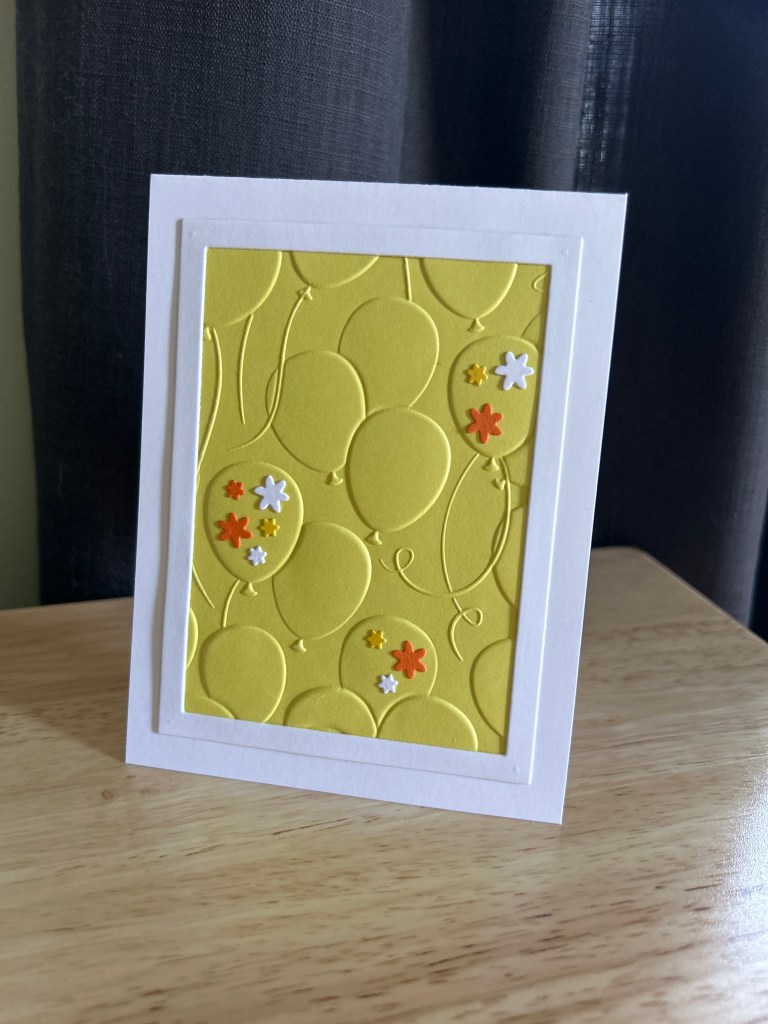
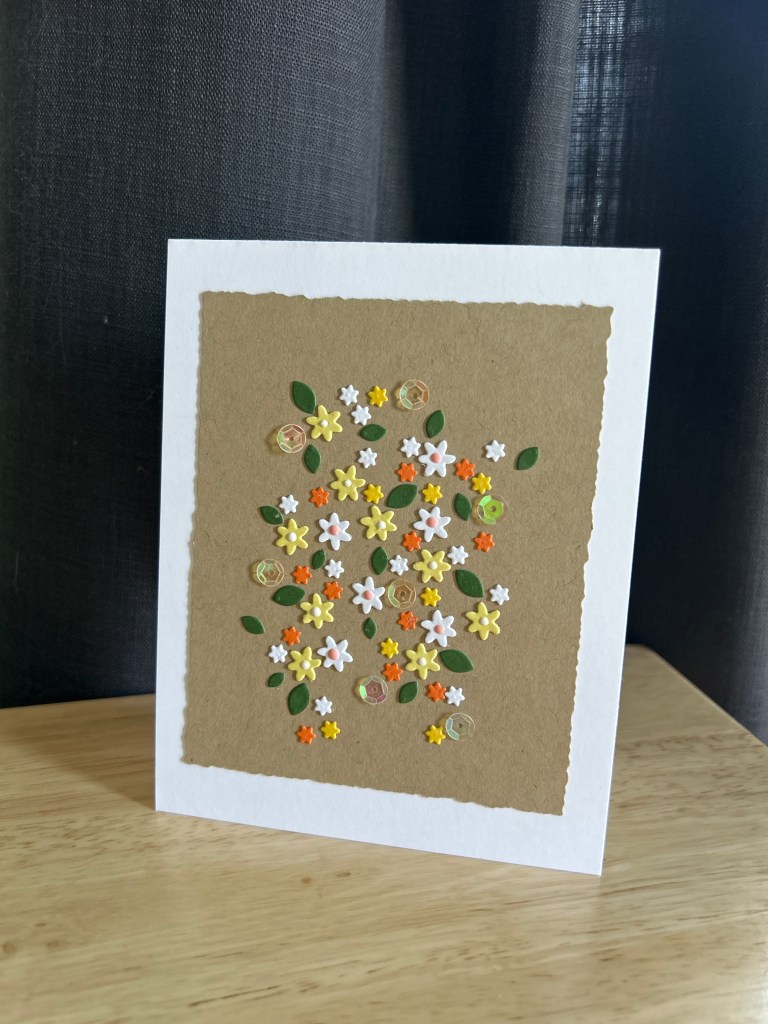
This week I pulled out Flower Garden, an early Papertrey Ink stamp set. In my Evernote inventory, I had noted that I hadn’t used it very much, which is usually a sign that a set might be headed toward the donation pile.

When Flower Garden was first released, the sample cards leaned heavily into repeating patterns and fuller backgrounds. The designs were cheerful and decorative, with lots of layered elements and sentiment labels.

Instead of trying to recreate that original style, I simply started experimenting.

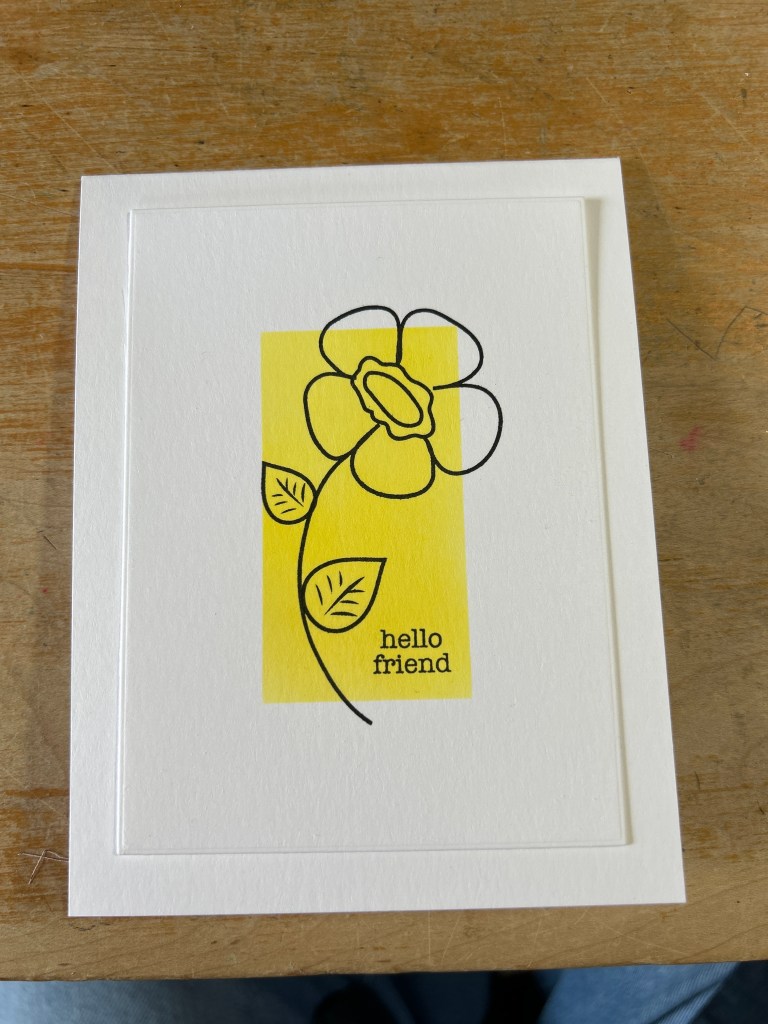
For the first card, I masked off a section of the card and blended a bright yellow. Then I stamped the flower outline across the panel to create a simple black pattern.

Keeping the rest of the panel mostly black and white helped that single flower become the focal point. A small sentiment strip finished the design without competing with the pattern.

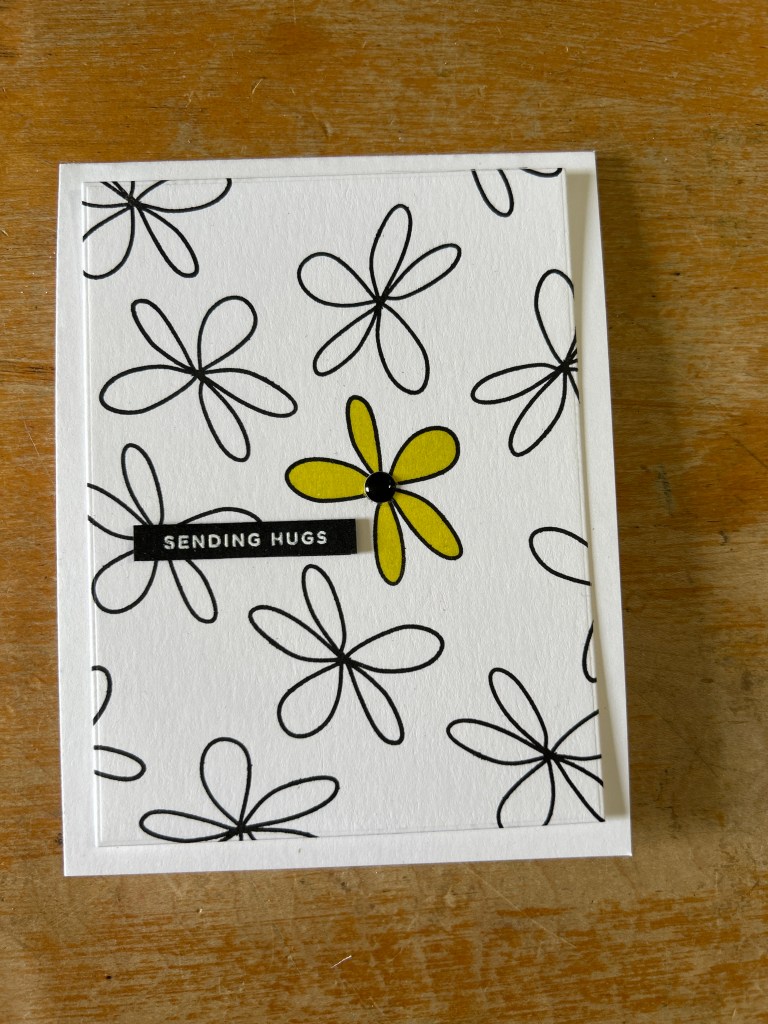
Keeping the graphic vibe going, I stamped a single flower to create a background. The design relies on white space and a limited palette rather than a busy pattern.

This approach gave the stamp set a surprisingly modern look and showed how well the line art works when it has room to breathe.

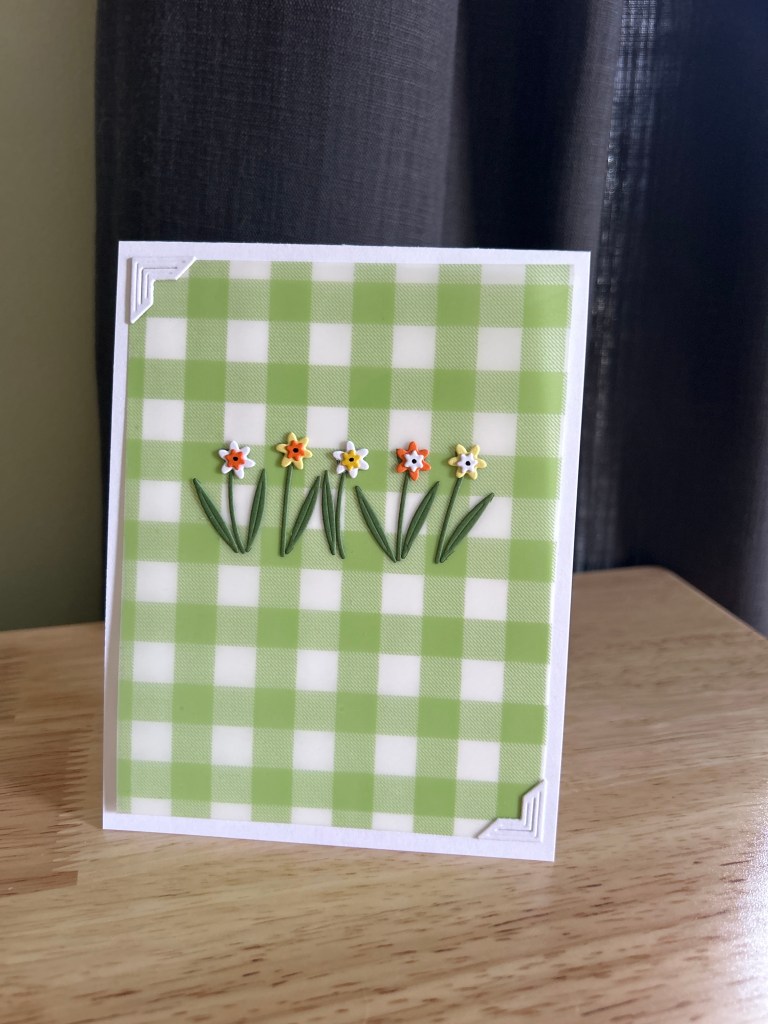
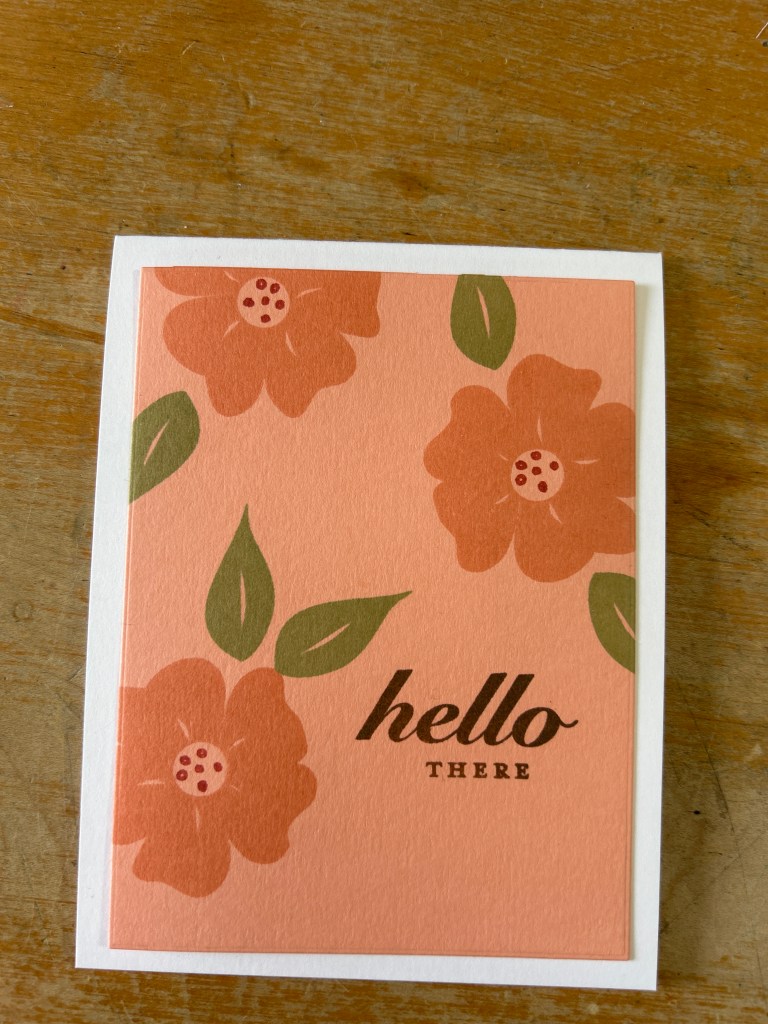
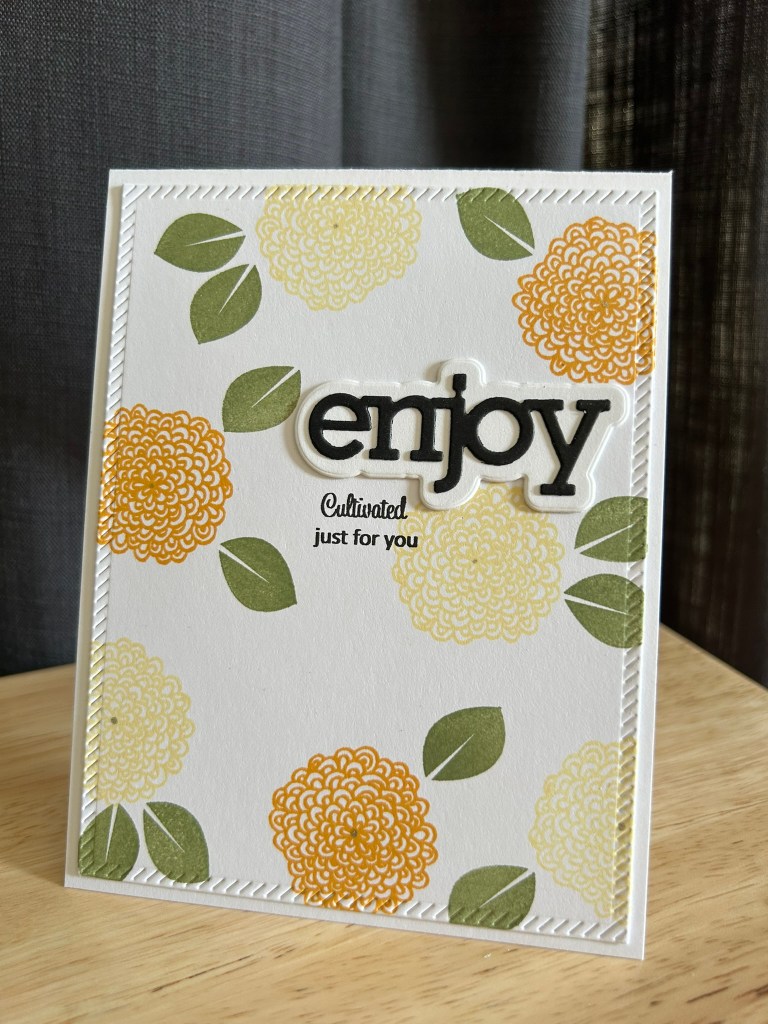
For the third card, I returned to a repeating pattern, but with a softer palette and simpler composition.

Using peach tones with olive leaves created a vintage textile feel.

This card felt like a bridge between the original style of the set and the simpler designs I tend to gravitate toward now.

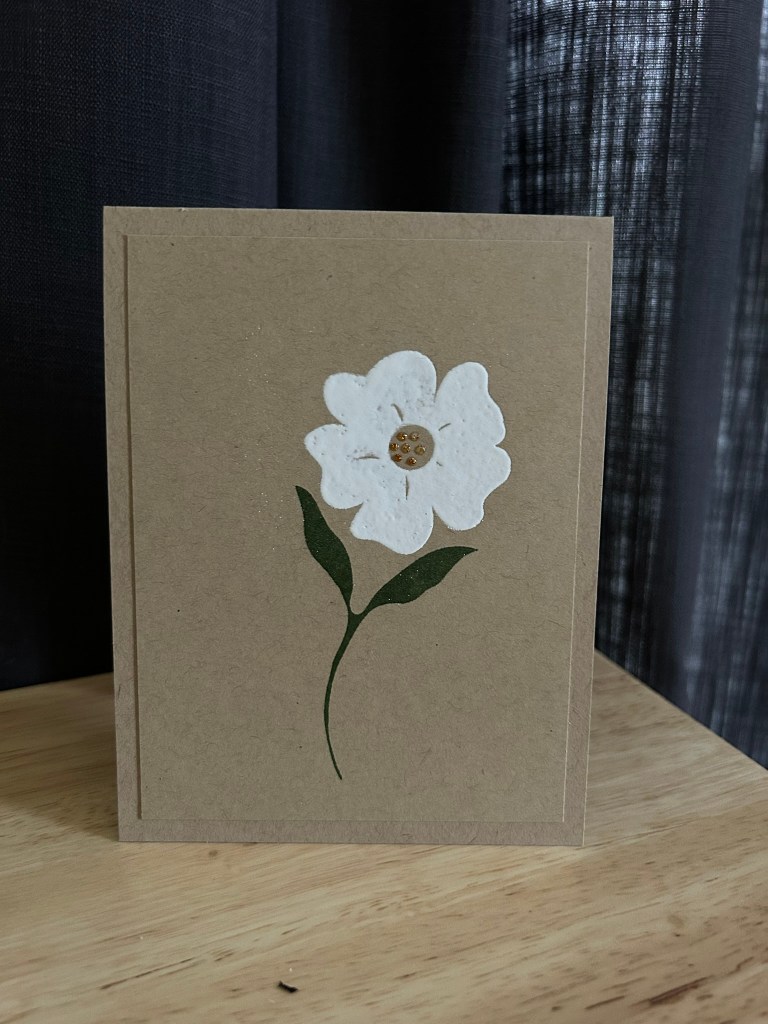
The final card is the quietest of the group.

A single white flower heat embossed (twice) on kraft cardstock, paired with deep green leaves and tiny gold glittery drops in the center, lets the design stand on its own. I chose to leave the front sentiment-free so the flower could remain the focal point.

In fact, a friend saw the card sitting on my desk and immediately picked it out to send. That’s usually a good sign that a design is working.

Final Thoughts

Working with Flower Garden again reminded me that good design is simply good design.

The stamps themselves didn’t change. What changed was how I approached them.

When I first bought this set years ago, I probably felt like I needed to use every element and fill the entire card front with pattern. That was the style I saw in the original samples, and it’s easy to assume that’s the way a set is meant to be used.

But revisiting the set showed me something different.

The same images can create bold graphic patterns, soft calico-style florals, modern minimal designs, or a single simple botanical. Once I stopped trying to use the set the way I originally saw it, it revealed far more flexibility than I had given it credit for.

Sometimes an older stamp set doesn’t need to be replaced. It just needs to be seen again with fresh eyes.


Another Revisit: Peaceful Garden

In my effort to use what I have, I have been revisiting older stamp sets and look at it again with fresh eyes. Sometimes my style has changed, sometimes I see new possibilities in the images, and sometimes it simply reminds me why I kept the set in the first place.

This week I revisited Papertrey Ink’s Peaceful Garden, an older botanical set that includes bamboo, grasses, and a few sentiments. Instead of trying to recreate ways I have used it in the past, I experimented a bit and ended up making three very different cards.

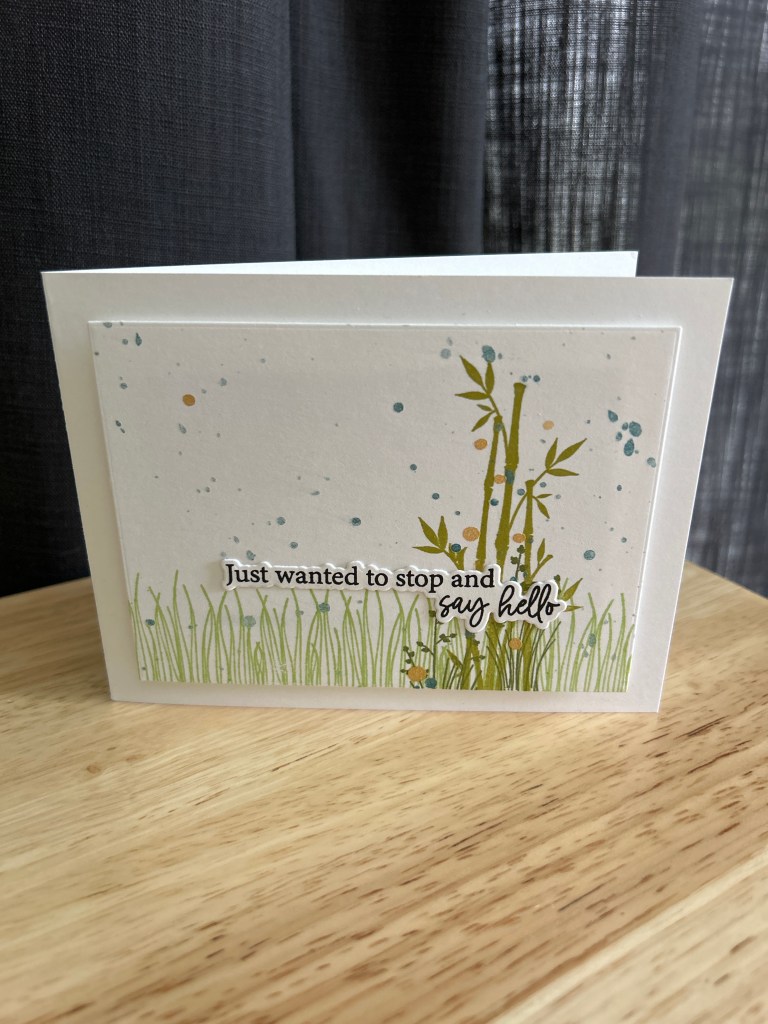
For the first card I stamped the bamboo along the right side of the panel and added a simple grassy foreground. To give the scene some energy, I splattered blue and gold ink across the panel. I am currently obsessed with Tim Holtz Distress Spritz!

The splatter softens the bamboo and adds a light shimmer. I finished the card with a sentiment from a Honeybee Stamps set that happened to be on my desk.

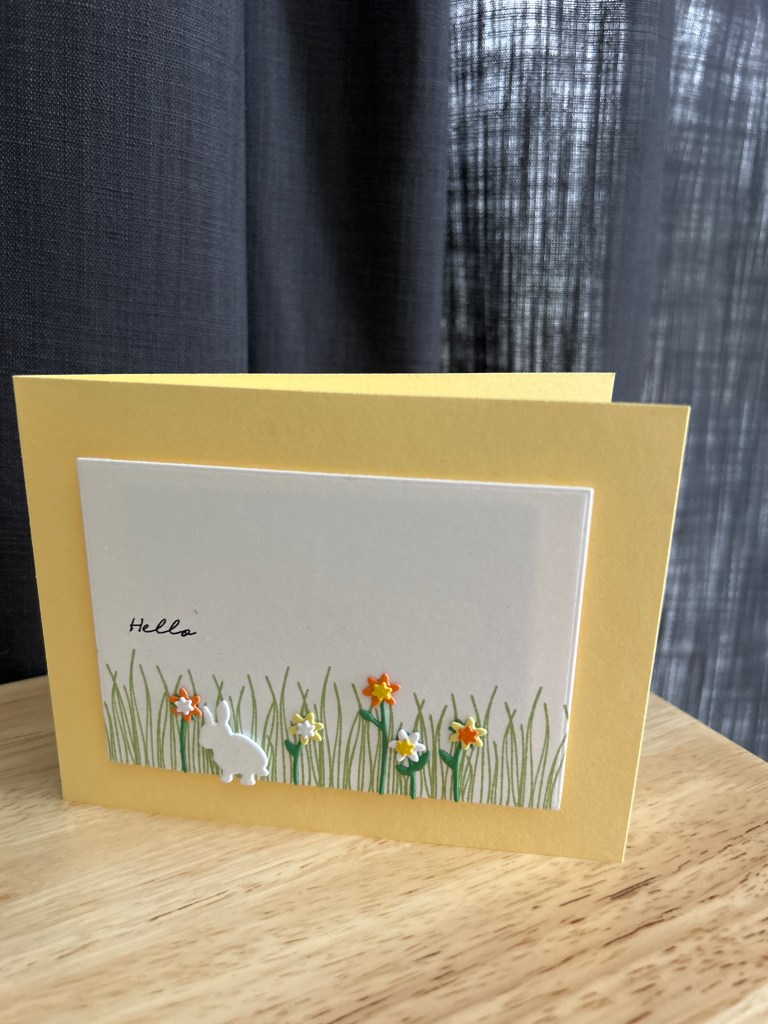
For the second card I returned to the grass stamp and was dreaming of spring. I added a simple bunny silhouette and a row of tiny layered flowers to suggest spring in miniature.

This one is more playful than the first card. The yellow card base adds warmth and the little flowers give the scene some dimension without overwhelming the simplicity of the design.

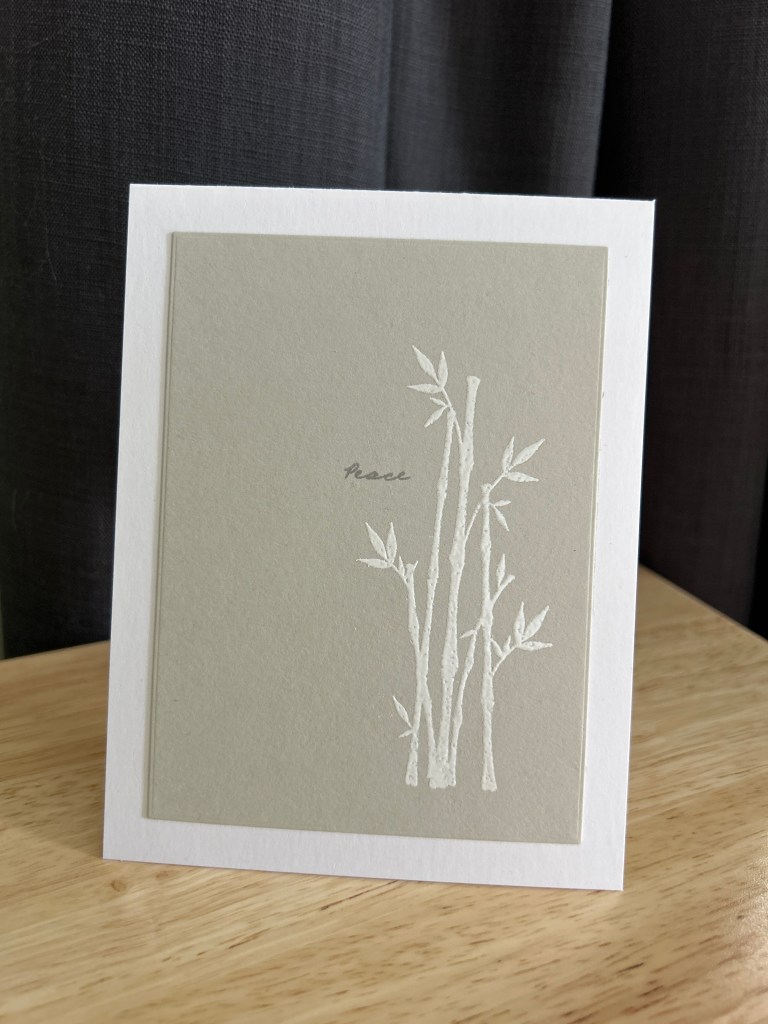
For the final card I wanted to try something quieter. I heat embossed the bamboo in white on soft gray cardstock and paired it with a masked “peace” sentiment from the set.

The white embossing gives the bamboo a soft, almost carved look against the gray background. Leaving plenty of open space keeps the card calm and minimal, which felt like the right direction for this image.

Revisiting older supplies like this is always a good reminder that sometimes a stamp set doesn’t need anything new—just a slightly different approach. It was fun to see how three very different cards could come from the same set. Already looking around for what set to pick next!

Supplies

  • Papertrey Ink: Peaceful Garden
  • Honey Bee Stamps: Inside Kindness sentiments
  • Impression Obsession: Rabbit Set
  • Poppystamps: Wildflower Patch
  • Impression Obsession: Tiny Flowers
  • Impression Obsession: Tiny 6 Petal Flowers
  • Tim Holtz Distress Spritz

Plot Twist: This Set Is Actually Modern

The Papertrey Ink Garden of Life set has been sitting in my stash for years.

I am fairly certain I bought it secondhand. Probably Facebook. Maybe eBay. Five years ago? That sounds about right.

I remember trying to use it once. I made something, did not quite know where to go with it, and quietly put it away.

Today, I pulled it back out.

I had been watching a YouTube video by Prairie Paper & Ink, and she was watercoloring florals from a new Simon Says Stamp set and her colors were inspriring. That sent me digging through my own stash to see if I had anything with some similar shapes.

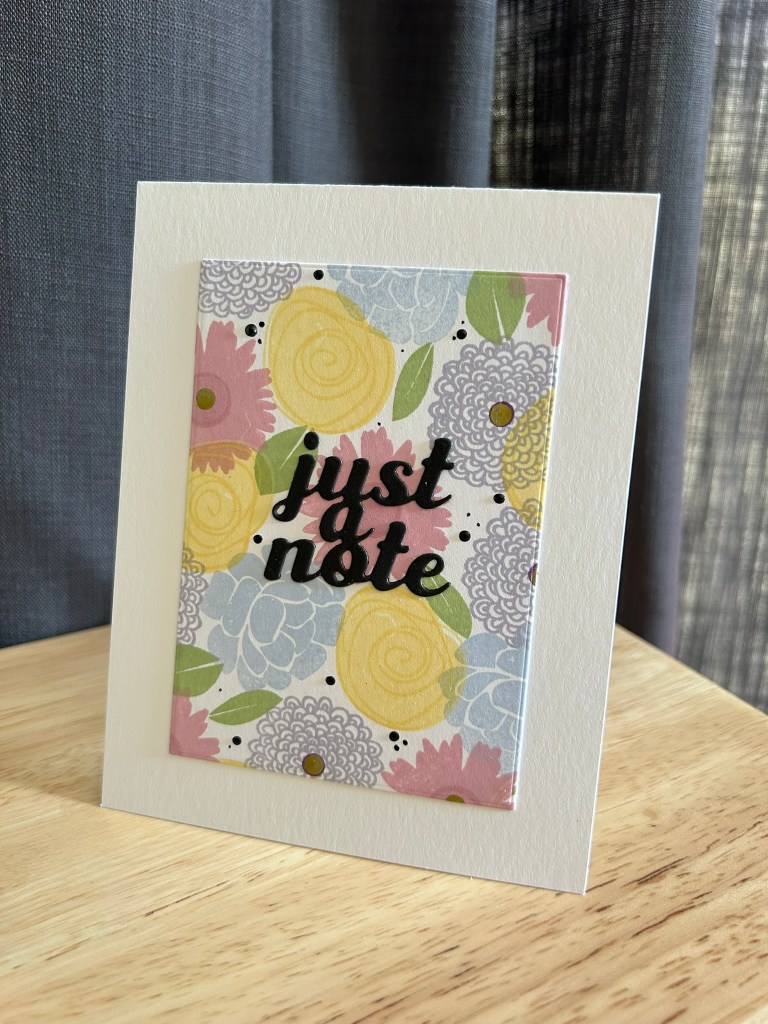
It was that mum in Garden of Life that caught my eye. The first card leaned into pattern and layering. I let the flowers fill the space and added a bold die cut sentiment. It felt cheerful and generous.

Once I started looking more closely at the set, I went down a little rabbit hole and found an old video of Nicole Heady from Papertrey Ink. She had stamped one of the florals on fabric and sewn it into a bag. Seeing it used that way shifted something for me. It reminded me that this set was designed thoughtfully.

From there, the cards began to evolve.

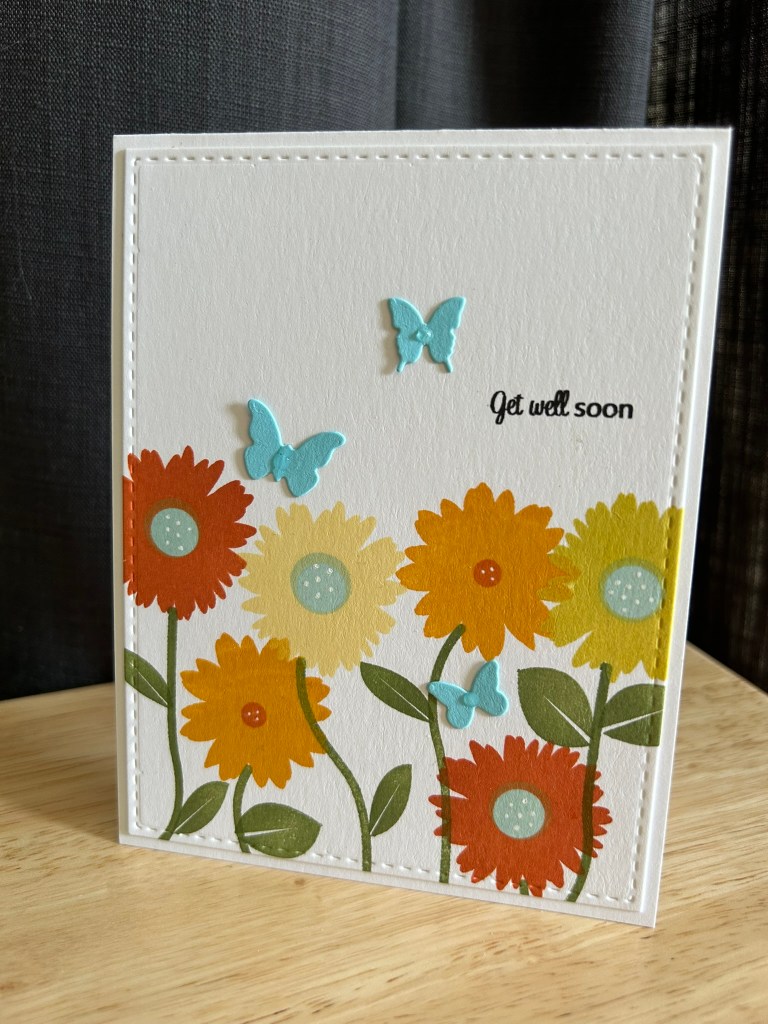
I focused on the fuller florals and created a more joyful get well card with layered blooms and butterflies. Same set. Completely different mood. At some point I consulted Chat GPT regarding what color to use on the flower centers to help it feel more spring like- the answer aqua. Brilliant.

Then I tried something completely different.

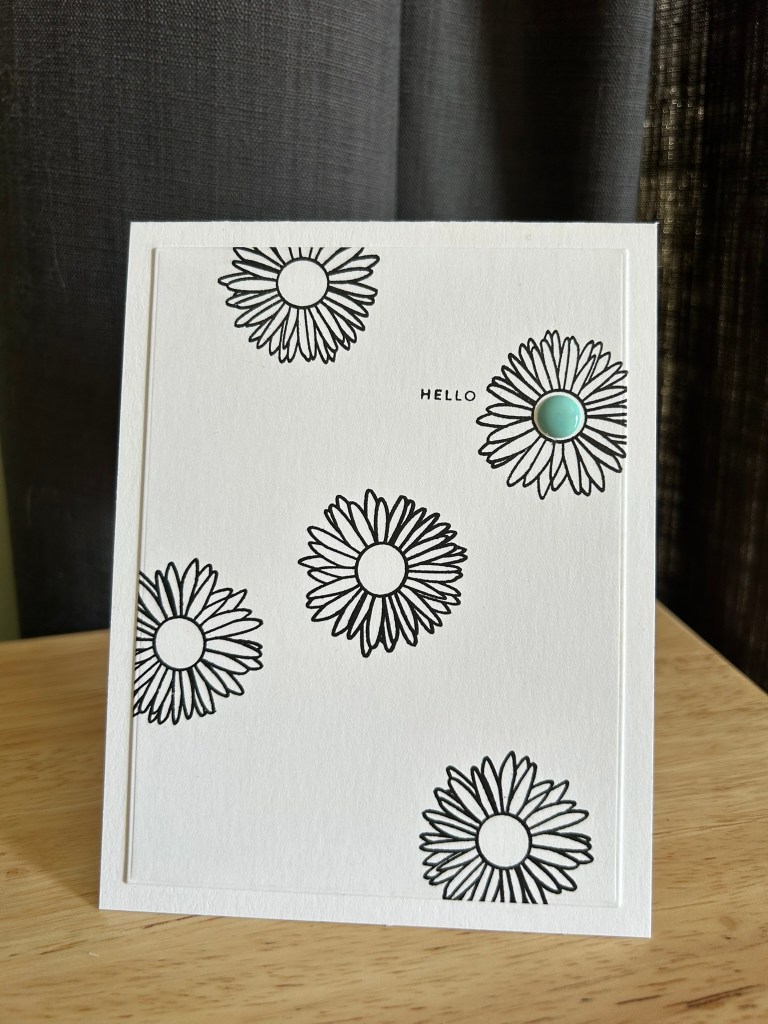
I stamped the graphic outline flowers in black on white and left a lot of breathing room. One small aqua center dot became the only pop of color. Suddenly the set felt modern. Crisp. Intentional.

That little aqua accent started to show up again and again. It became the thread tying the cards together.

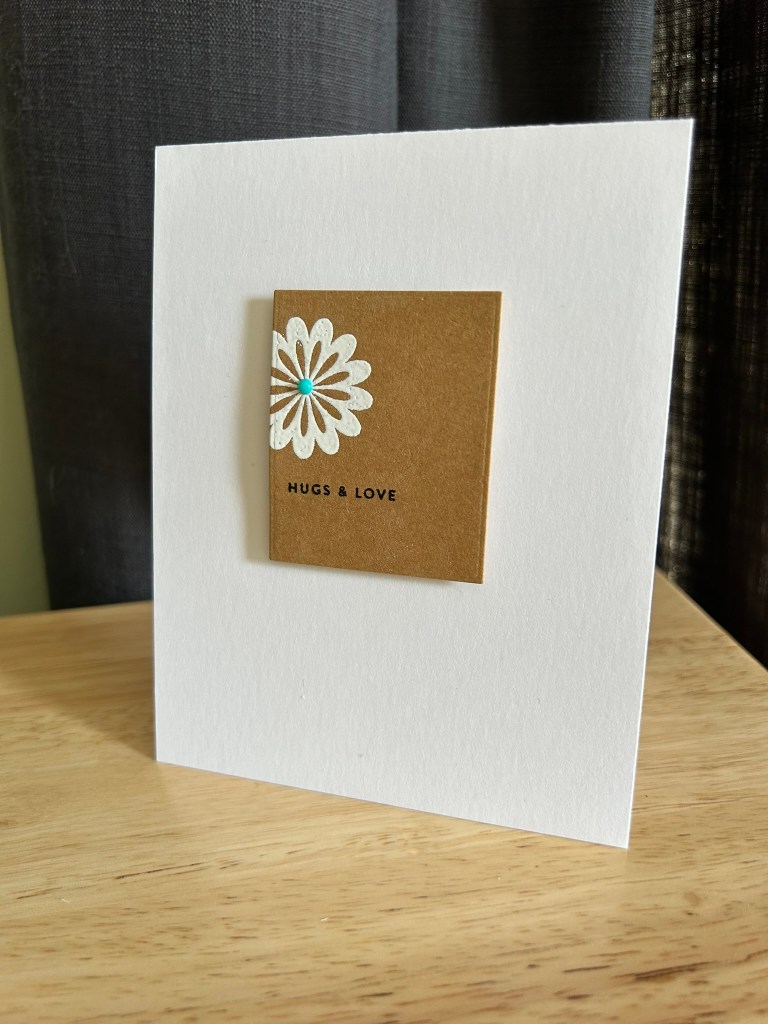
Next, I played with white embossing on kraft using one of the more open graphic flowers. Cropped into a smaller square and mounted on a white base, it felt like a tiny art print. Clean. Graphic. Contemporary.

I used to think this set felt a little old fashioned.
Now I see that it was simply waiting for me to catch up.

The stamps were always well designed. They stood the test of time.

What evolved was my eye — my sense of balance, my comfort with restraint, my willingness to let white space do the work.

Sometimes rediscovery isn’t about the supply.
It’s about the maker.

Casing a Watercolor Birthday Card (and Making It Your Own)

Sometimes inspiration arrives in the mail.

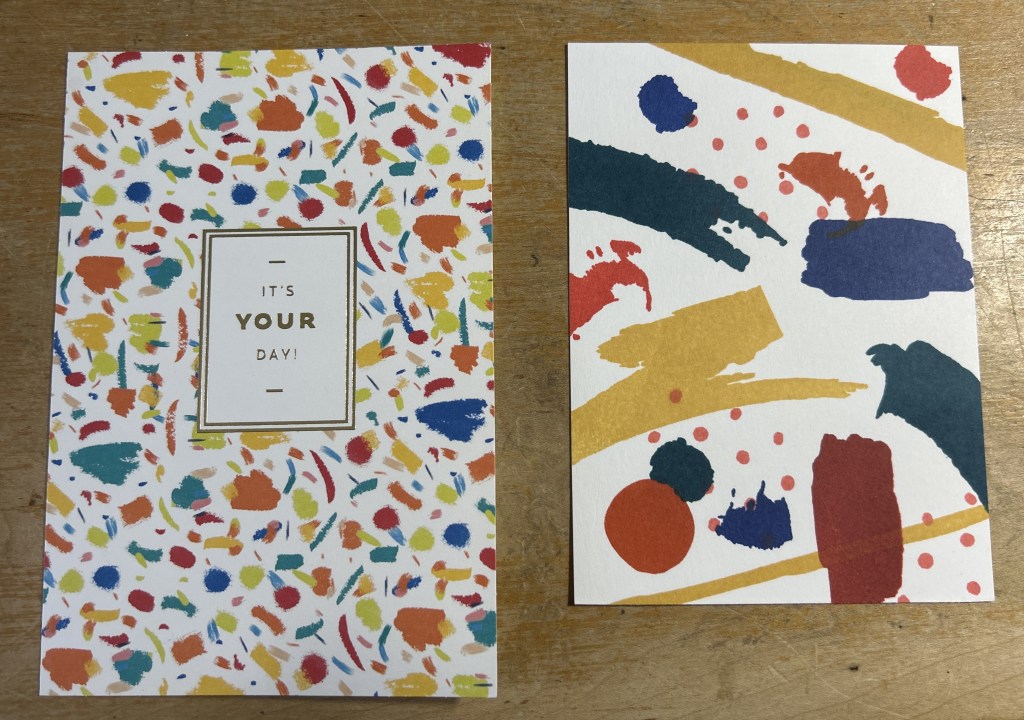
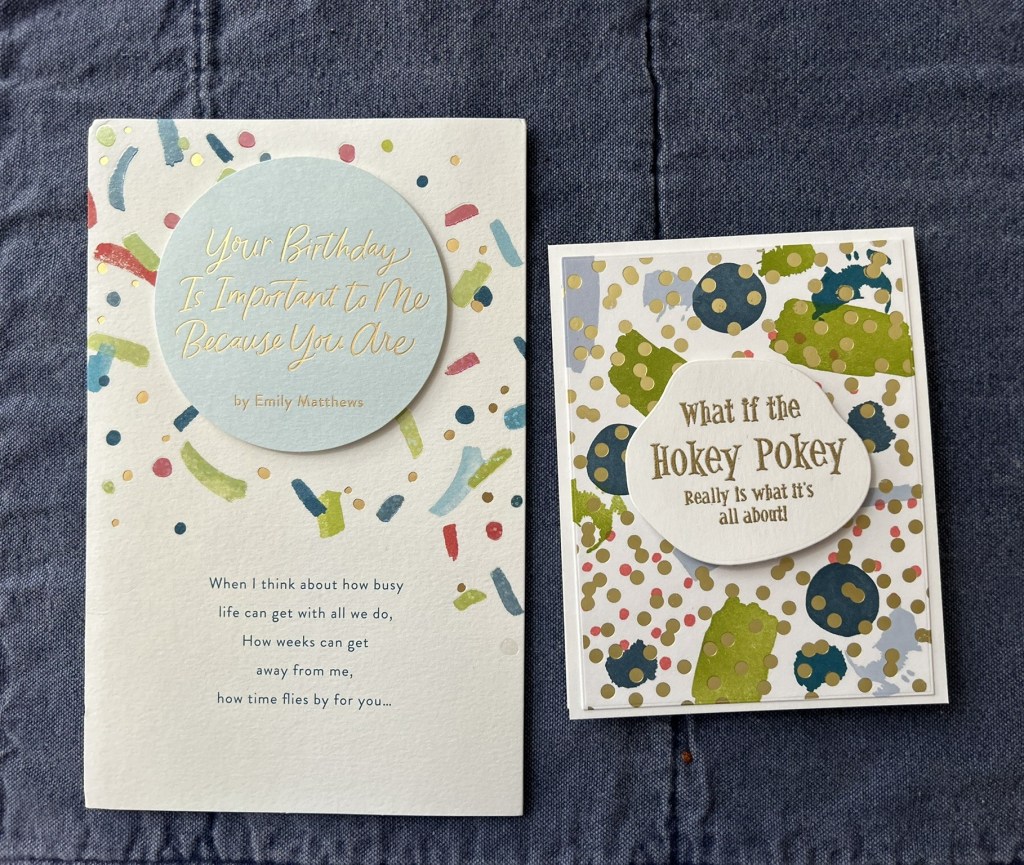
I received a birthday card from my aunt this year that immediately caught my eye. It featured a joyful watercolor background filled with playful brushstrokes in mustard, teal, navy, and red. The color story felt energetic but cohesive, and I knew I wanted to explore that palette in my own way.

Rather than copying the card directly, I treated it as a starting point and asked: What do I love most about this? The answer was clear — the bold, painterly shapes and the modern color combination.

Building the Background

To recreate that abstract watercolor feel, I pulled out:

  • Papertrey Ink – Watercolor Wonder
  • Concord & 9th – Playful Patterns

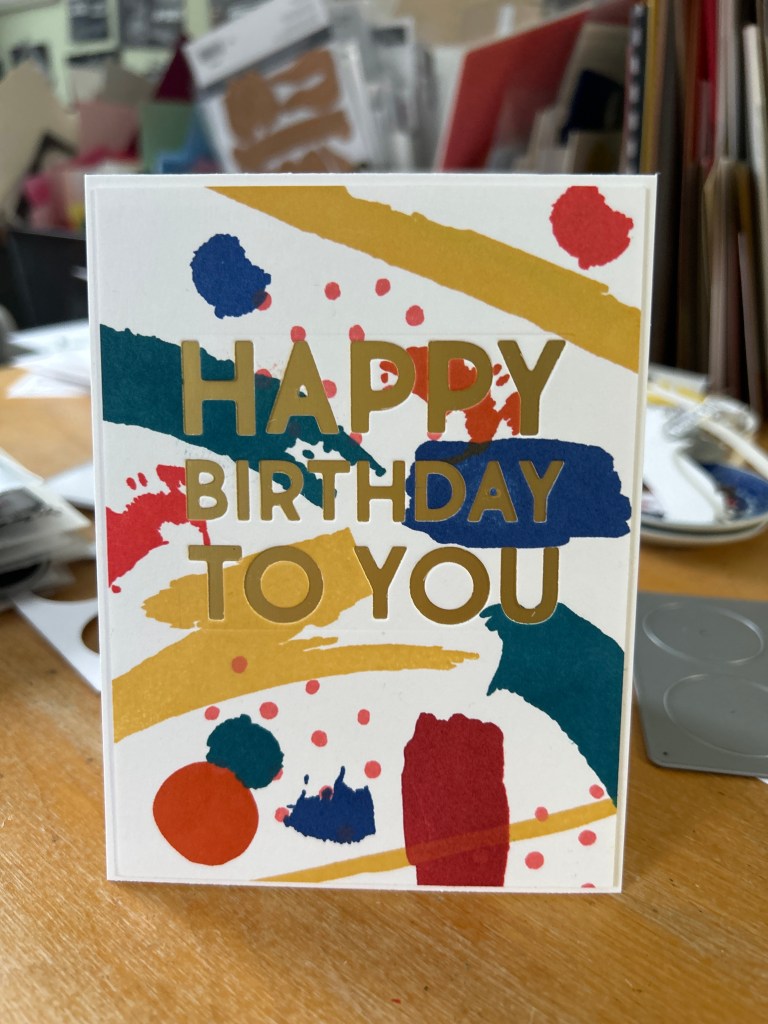
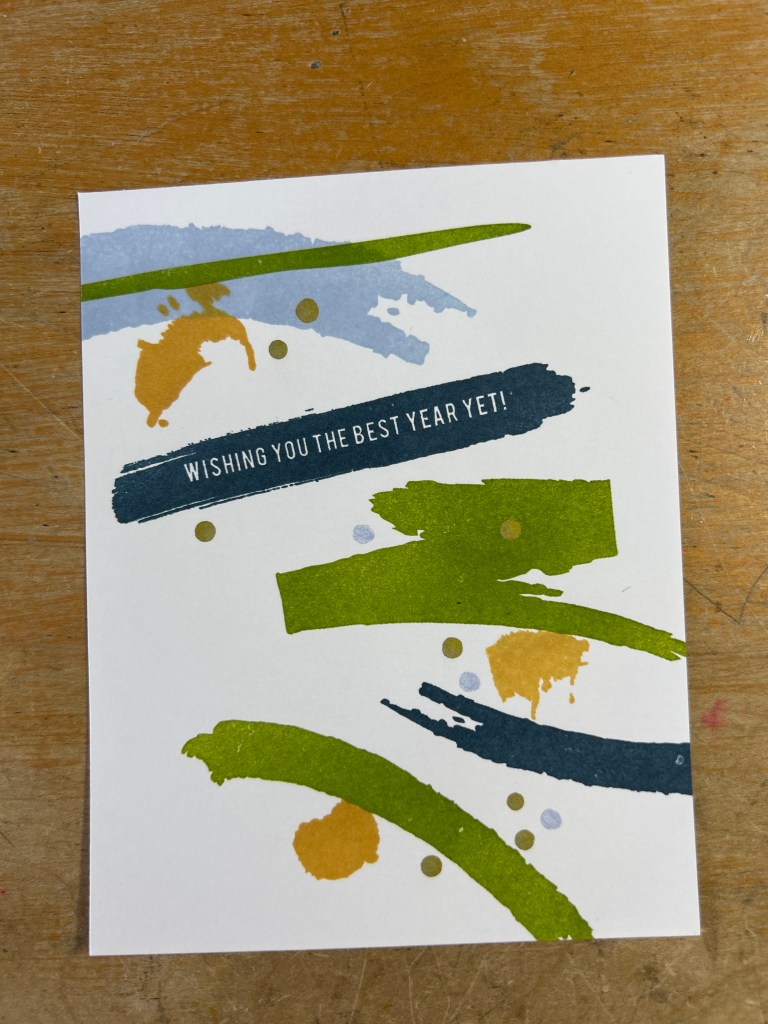
I combined larger brushstroke images with smaller dots and organic shapes, working in layers. The key was keeping the color palette tight: mustard yellow, deep teal, navy, and a warm red/coral.

Instead of trying to “balance” every mark, I let the shapes overlap naturally. The background is busy, but the white space allows it to breathe.

Choosing the Sentiment

With a bold background, the sentiment needed to be strong enough to stand up to it.

I used the Sizzix Tim Holtz Thinlits Bold Text (665847) die set and cut “HAPPY BIRTHDAY TO YOU” directly from the finished panel. Rather than layering a sentiment on top, I wanted the words to become part of the design.

Behind the cut panel, I added a layer of matte gold cardstock to carry the cold foil from the original card. Originally, I tested mirror gold. It was fun and flashy, but it overpowered the painterly background. The matte gold, however, softened the look and felt more integrated. It added richness without competing with the watercolor texture.

Inlaying the small inner letter pieces kept the design sleek and flush, which helps maintain a clean, modern feel.

Casing a card doesn’t mean recreating it exactly. It means identifying what speaks to you and translating that element through your own supplies and style.

This project reminded me how powerful a strong color palette can be — and how a small material choice, like switching from mirror to matte gold, can completely change the final look.

I had so much fun, I kept going!

Being Inspired!

I sat down at my craft desk this Saturday morning feeling a little… untethered. You know that feeling — you want to make something, but nothing in particular is calling your name. The desk is cluttered, and every option feels both possible and overwhelming.

So I opened Stash Summit and watched Terese Calvin’s session.

Almost immediately, I felt that familiar spark of inspiration. Watching her work through a simple stenciling technique was exactly what I needed. It gave me a starting point instead of a blank slate.

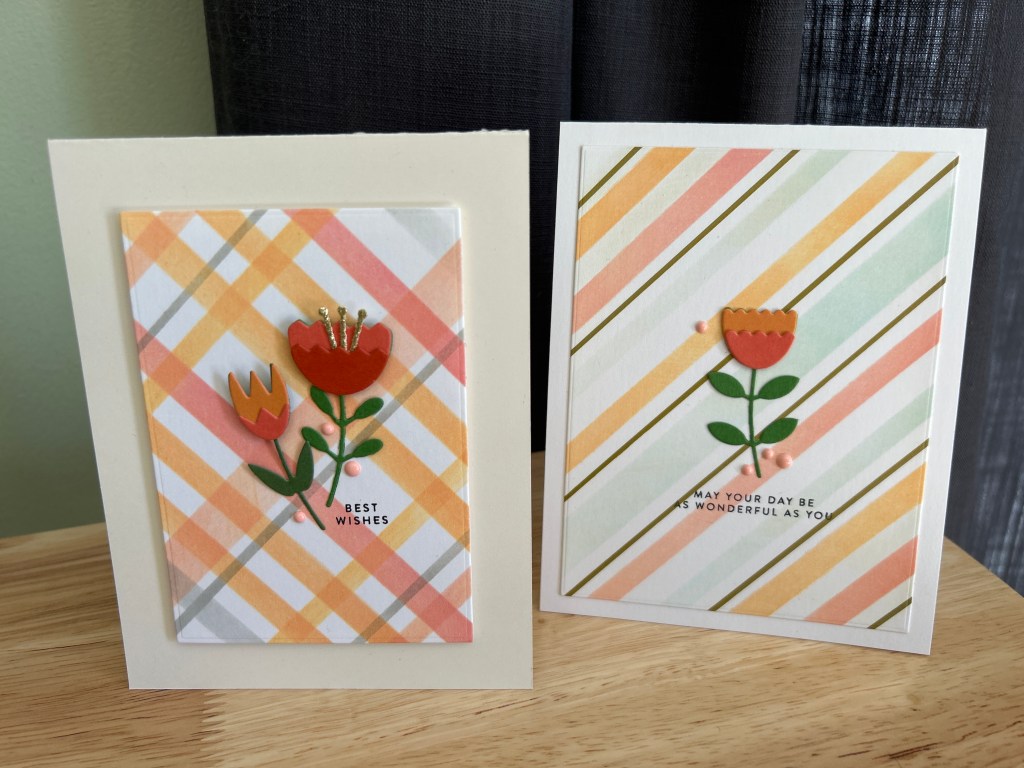
I pulled out my previously unused Pinkfresh Studio Dainty Plaid stencils and decided to follow her general approach — soft layers, a light hand, and letting the background do the work. From there, I reached for a small set of oldies-but-goodies Memory Box floral dies I had just picked up on sale — one of those little happy purchases waiting for the right moment.

This process genuinely brightened my day. Huge thanks to the Stash Summit team, and to Terese in particular, for the inspiration and the gentle reminder that sometimes all it takes is a place to begin.

Supplies Used
Pinkfresh Studio – Dainty Plaid Stencils
Distress Oxide Inks (soft spring tones)
Memory Box Floral Dies
Concord & 9th Enamel Dots
Simon Says Stamp – Tiny Words Birthday (sentiments)

Nine Daisies

We all have design ideas we return to again and again. For me, the grid is one of them.

I love how a grid works on a card. It’s orderly without being rigid, calm without being boring, and it gives every element a moment to shine. When I’m unsure where to start, a grid almost always gets me there.

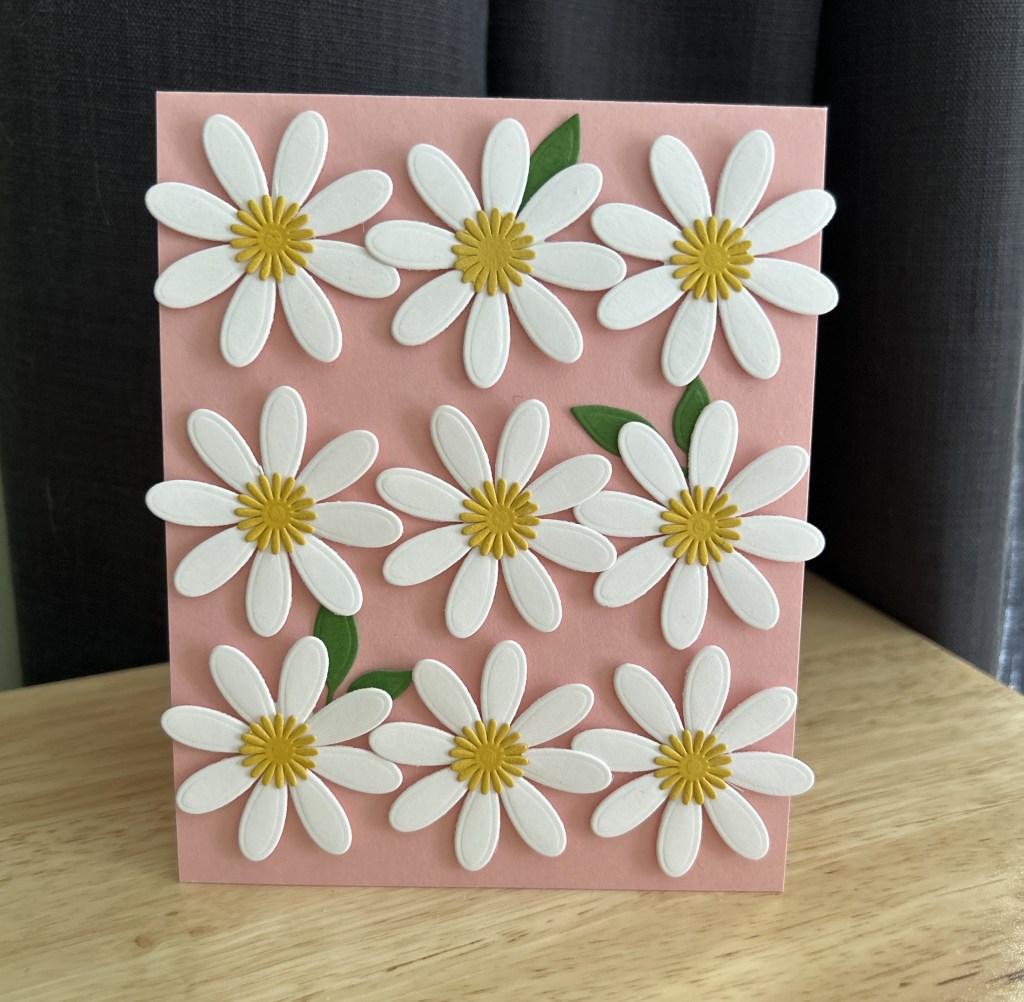
This card was inspired by a The Stamp Market floral grid I saw on Instagram. I loved the simplicity of the repeated flowers and the way the design felt both sweet and modern. Using that as a jumping-off point, I put my own spin on it with products I already had in my stash from The Stamp Market.

One of the things I’m trying to be more mindful of is using what I already own. The flowers on this card come from The Stamp Market Easter Egg Shaker Die, which I originally bought specifically for this daisy. It wasn’t sitting out on my desk, but it was there waiting in my stash, and this felt like the perfect moment to bring it back out.

Rather than filling the panel completely, I chose nine daisies arranged in a 3×3 grid. That small decision made the card feel more intentional and a little more grown-up, which felt right for the scale of the flowers. I did cut a quarter inch off the bottom of the card to keep the spacing. I also added just a few leaves to gently break the repetition. I was briefly stuck on the top row until I shared a photo to Chat GPT and got the suggestion to use only one leaf there. Sometimes the smallest change makes all the difference.

The flowers are popped up slightly for dimension, but that’s where I stopped. No bling. No front sentiment. I wanted the flowers to do all the talking. This is one of those cards that came together quietly and confidently, and it’s honestly one of the sweetest cards I’ve ever made.

Thanks to the original Instagram post for the inspiration. I love how seeing someone else’s work can spark something new, especially when it encourages me to look back through my own supplies and see them with fresh eyes.

Supplies Used

  • Cardstock: Neenah Solar White 110 lb
  • Ink:
    • Papertrey Ink Fresh Peony
    • The Stamp Market Golden (flower centers)
    • The Stamp Market green paper (I believe it’s Cactus)
  • Dies:
    • The Stamp Market Easter Egg Shaker Die (flower and leaf pieces)

Some supplies were pulled from my stash. Exact ink and paper shades may vary.


Rescuing the Unchosen Card

One of my favorite creative rituals isn’t starting something new.
It’s going back.

I give away almost all of the cards I make. I’m known for my kraft box of cards. When seasons change, like now as I put away Christmas and holiday cards, I go through what was left from the last cycle. They’re finished, technically, but no one picked them. And that tells me something important: the card isn’t bad, it’s just unresolved.

I pull those cards out and put them in a pile, saving them to revisit in a different light when I have a moment.

This card lived in that pile for a while.

The original problem

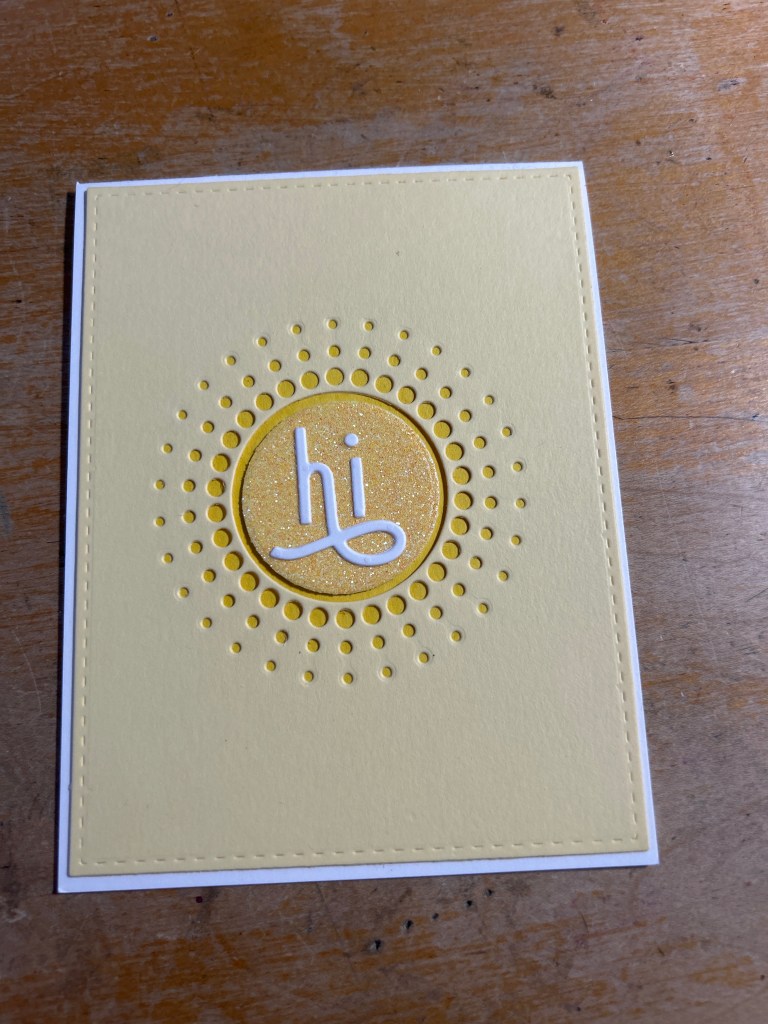
The original version had all the right ingredients:

  • a cheerful yellow sunburst
  • a simple “hi”
  • a little sparkle

But everything was polite. Centered. Careful. The colors were pleasant, the design was tidy, and yet nothing invited the eye to linger. It was the kind of card you don’t dislike, but also don’t reach for.

And that’s usually the clue.

The first change: commitment

Instead of trying to tweak the card in place, I made a more decisive move and cut the entire focal element into a circle. Looking at it more critically, I realized the stitched panel was fighting with the fantastic sunburst die cut.

That single change gave the design a sense of confidence. Of course, it also meant die cutting through four layers of paper, which ultimately resulted in me carefully separating the top layers that did cut from the card base that very much did not.

But the result was worth it. The sunburst stopped behaving like a background detail and started acting like a focal point.

Sometimes a card doesn’t need more.
It needs a clearer decision.

The second change: contrast

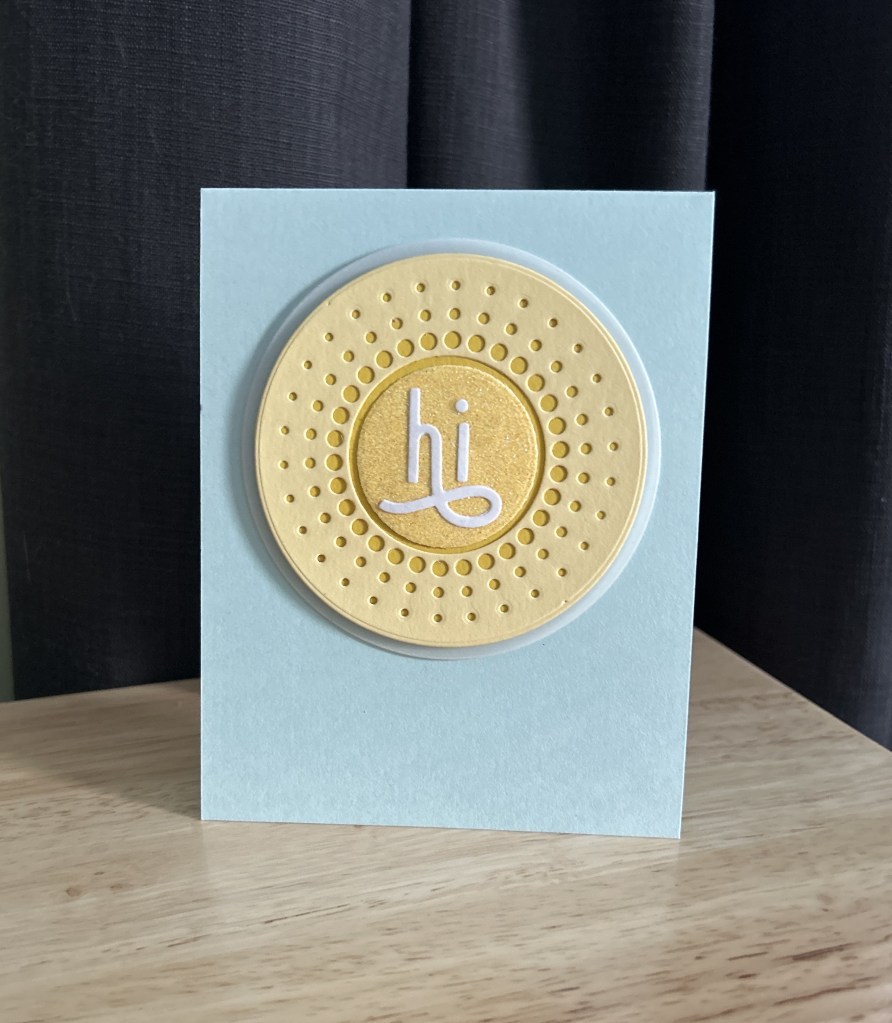
Next, I mounted the circle on a soft blue card base. This was the turning point. I was very consciously channeling a sky.

The warm yellow finally had something to push against, and the sparkle in the center suddenly felt intentional instead of decorative. The card shifted from neutral to expressive simply by letting warm and cool colors do their natural work.

The final change: air

The finishing touch was a thin vellum shadow behind the circle, with two smaller circle die cuts layered underneath to create a little space between the vellum and the card base.

That quiet layer made all the difference. It added separation without weight, softness without distraction. No extra embellishments, no added noise. Just a little breathing room so the focal element could sit comfortably on the card front.

This was the moment the card felt finished.

A note about the inside

The original card had “brighter days ahead” stamped on the inside.

It wasn’t wrong, but it felt a bit like making a promise I couldn’t fully keep. I’ve realized I don’t love sentiments that tell someone else how to feel or what’s coming next. It’s the same reason I shy away from cards that say “smile.” I don’t want to instruct or predict on someone else’s behalf.

What I can do is offer something that’s within my control.

So I’m redoing the inside sentiment as “sending sunshine.” It’s more personal and more active, and it mirrors exactly what the front is doing visually. It’s not a directive or a forecast, just a small offering.

Sometimes the fix isn’t just structural.
Sometimes it’s tonal.

Why I love doing this

Redoing unchosen cards teaches me more than starting from scratch:

  • I learn why something didn’t work
  • I practice restraint instead of accumulation
  • I use what I already have

It’s low-stakes, deeply satisfying, and surprisingly instructive. Often the card doesn’t need to be remade. It just needs to be listened to.

This one is finally ready to go back in circulation.
And the orphan pile just got a little smaller.


Supplies

  • Die: Memory Box Circle Burst
  • Sentiment: The Stamp Market “hi” word die (now discontinued)
  • Center circle: Yellow glitter cardstock (brand unknown, from stash)
  • Cardstock:
    • Yellow cardstock for the burst (Papertrey Ink or similar weight)
    • Soft blue card base (likely Spellbinders, exact color unknown)
  • Vellum: Heavyweight vellum from stash
  • Adhesives: Standard tape runner and liquid glue

A Long-Awaited Treat: My Just Desserts Series

Finally playing with a set I admired back in 2016 from Papertrey Ink.

There is a particular joy in finally getting your hands on something you’ve wanted for years. When Papertrey Ink released Just Desserts by Lizzie Jones in March 2016, I remember admiring it instantly: the clean lines, the playful toppings, the thoughtful layering. At the time it was outside my budget, and it slipped into that familiar category of “maybe someday.”

This month I found the set secondhand from another PTI fan, and it felt like a little message from my 2016 self: you get to play with this now. And now that it’s mine nearly a decade later, I’m discovering how well it fits the way I create today. Minimal, intentional, with small touches of sparkle and a few new tools I didn’t have back then. It turned into a fun Just Desserts Series full of experimentation and joy.

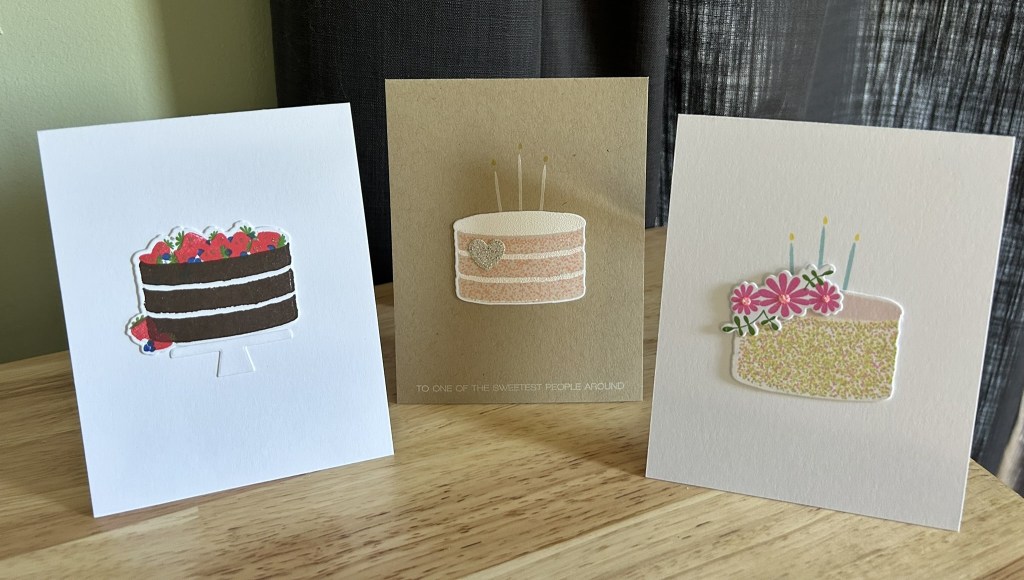
Here are the three cards in the order shown in the photo.

Card 1: Chocolate Berry Cake
This one is bold but still very clean. The chocolate layers add natural contrast, and the berries bring in color without making the card feel busy. I added a few soft sparkle dots with a Jelly Roll glitter pen, one of my favorite ways to finish a minimal card without overwhelming it.

The cake stand isn’t part of the Just Desserts set; I borrowed it from another Papertrey Ink set, I believe Imitation Basics. The scale isn’t perfect, but the embossed white-on-white look keeps it subtle, and it supports the design without drawing attention to itself.

Even with the deeper palette, the card stays minimal thanks to the open layout and calm spacing. It’s a nice reminder that bold color can still feel quiet and intentional.

Card 2: Kraft Cake With the Glitter Heart
This card became the heart of the series. I embossed the frosting with Brutus Monroe Alabaster Sparkle, which adds a fine shimmer that’s subtle but lovely in person. At first the cake felt a little ungrounded, and I tried adding a heart between the cake and the sentiment. That didn’t quite solve it.

The breakthrough came when I moved the heart onto the cake itself. Suddenly it felt intentional rather than corrective, and it became a focal point that tied everything together.

This one ended up modern, warm, and just a little bit sweet.

Card 3: Floral Sprinkle Cake
For this one, I wanted the stamped image itself to be the focal point. Lizzie’s three-layer sprinkle stamp is so well designed, and I used pink, soft green, and yellow inks to build those layers. The look is cheerful and light, and it doesn’t need much else. I added tiny drops of Stickles to the flower centers for a bit of sparkle. Each card in this series has some hint of shimmer, and here it feels especially playful.

What This Series Reminded Me Of
Working with this set that I admired years ago reminded me of a few things:

• Delayed gratification can be truly delightful.
• Minimal layouts let the designs shine.
• I don’t always need something new to feel inspired. Using what I have, or finding something secondhand, invites discovery.
• Older stamps don’t limit me. They give me room to explore.
• A touch of sparkle goes a long way.

This set was worth the wait.

Snowfall Collection

I was recently asked to make a set of cards for a fundraiser auction for our local community center, which absolutely tickled me. Sometimes you don’t really know if your work is good enough, or if what you’re making resonates beyond your craft table. So the request felt like a small, affirming nudge to keep going.

Lately, I’ve been experimenting with sets of cards — not identical designs, but related ones that explore a single idea from different angles. It’s less about telling a story and more about finding new ways to use what I already have on hand. Still, there’s a creative challenge in building cohesion across several pieces while letting each one stand on its own.

For this winter set, the framework was snowflakes. I decided to make five cards, beginning with one snowflake and adding another with each design — one, two, three, four, five — a gentle progression that builds like a snowfall.

I kept everything white on white so the focus would be on texture and light. I cut a flurry of snowflakes using the Lacey Snowflakes dies from The Stamp Market, sprayed them with a soft shimmer, and added clear sequins to the centers where a little sparkle felt right. The snowflakes are both delicate and substantial, the kind of classic design that never gets old. (And honestly, you can never have too many snowflake dies.) I paired them with the Modern Teardrops Frames from Simon Says Stamp, which added a quiet sense of structure to balance the soft shapes of the flakes.

Inside, I used sentiments from a treasured older Poppystamps Wintertime Sentiments set — thoughtful winter messages like Warm Winter Wishes and Time to Sparkle. They suit the quiet simplicity of the designs perfectly.

Here’s to more snowflakes, more small acts of making, and the quiet joy they bring.

The Scraps That Waited All Year

The Scraps That Waited All Year

Some scraps are too small to be useful, and too full of potential to throw away.

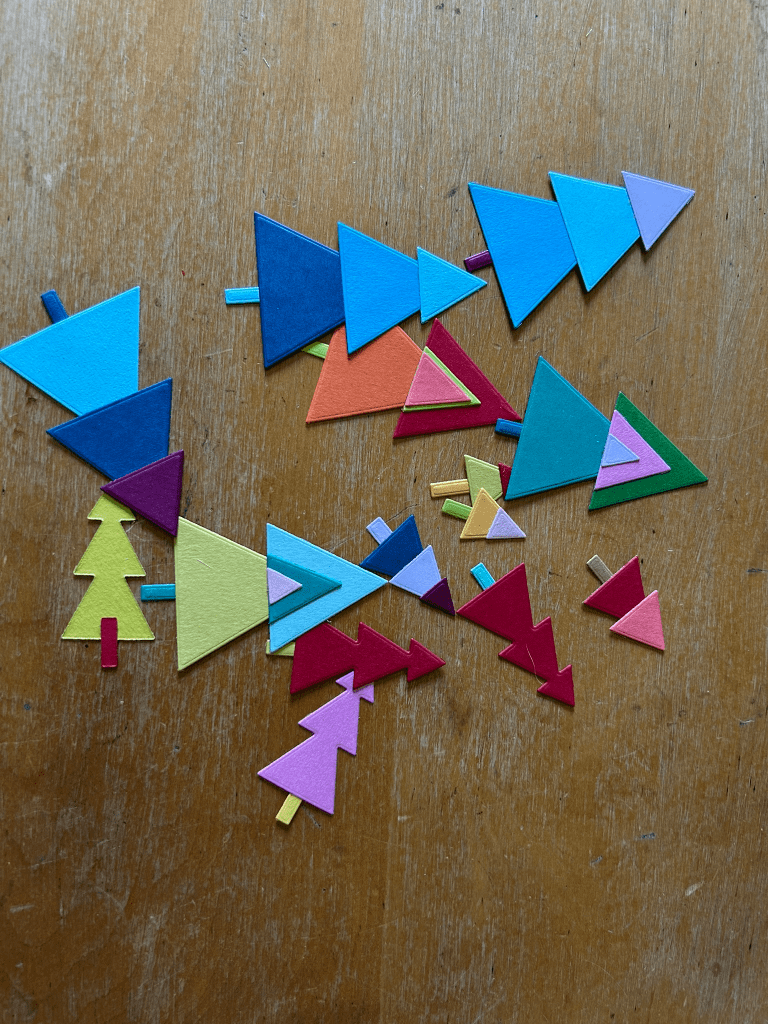
I keep two scrap piles in my craft room. One for the bigger pieces that can become backgrounds or layers. And one for the tiny scraps, the kind most people would sweep into the bin. Mine live in a small container near my desk, a jumble of cardstock corners, partial die cuts, and skinny slivers of color.

A year and a half ago, on vacation in Maine, I packed my tiny scrap stash and a handful of small dies. No stamps, no adhesives, no embellishments, just my die cutting machine and the quiet rhythm of cutting shapes. One of those dies was Newton’s Nook’s mug set. I cut out mugs to my heart’s content, challenging myself to see how many I could get from each piece of leftover scrap. They were bright and mismatched and delightful, and then I tucked them away in one of those plastic gum containers I nicked from my son, thinking I’d use them someday.

Someday turned out to be now.

This week, I pulled out those tiny cups and challenged myself to make a series of cards, all built from scraps that had been waiting more than a year. I started with a grid pattern because it felt natural, neat rows of mugs, small pieces coming together in harmony. But then came the real creative work, figuring out how to make each card feel distinct.

That’s where May Calico helped. I’ve started recording the ways I use AI to learn my craft, and this project felt like a good example. We talked about balance and repetition, how to shift a sentiment slightly off-center, and how to resist my usual impulse to add more. The constant reminder, less is more, helped me hold back when I wanted to keep layering. Sometimes all a card needs is one heart, or a quiet shimmer of foil, to feel complete. Each card stayed simple, but none felt the same.

What I love most is how these little mugs, once cast offs, now look intentional. They remind me that creativity often begins with what’s left over, and that even the tiniest scraps can hold a story if I give them time.