Rescuing the Unchosen Card

One of my favorite creative rituals isn’t starting something new.
It’s going back.

I give away almost all of the cards I make. I’m known for my kraft box of cards. When seasons change, like now as I put away Christmas and holiday cards, I go through what was left from the last cycle. They’re finished, technically, but no one picked them. And that tells me something important: the card isn’t bad, it’s just unresolved.

I pull those cards out and put them in a pile, saving them to revisit in a different light when I have a moment.

This card lived in that pile for a while.

The original problem

The original version had all the right ingredients:

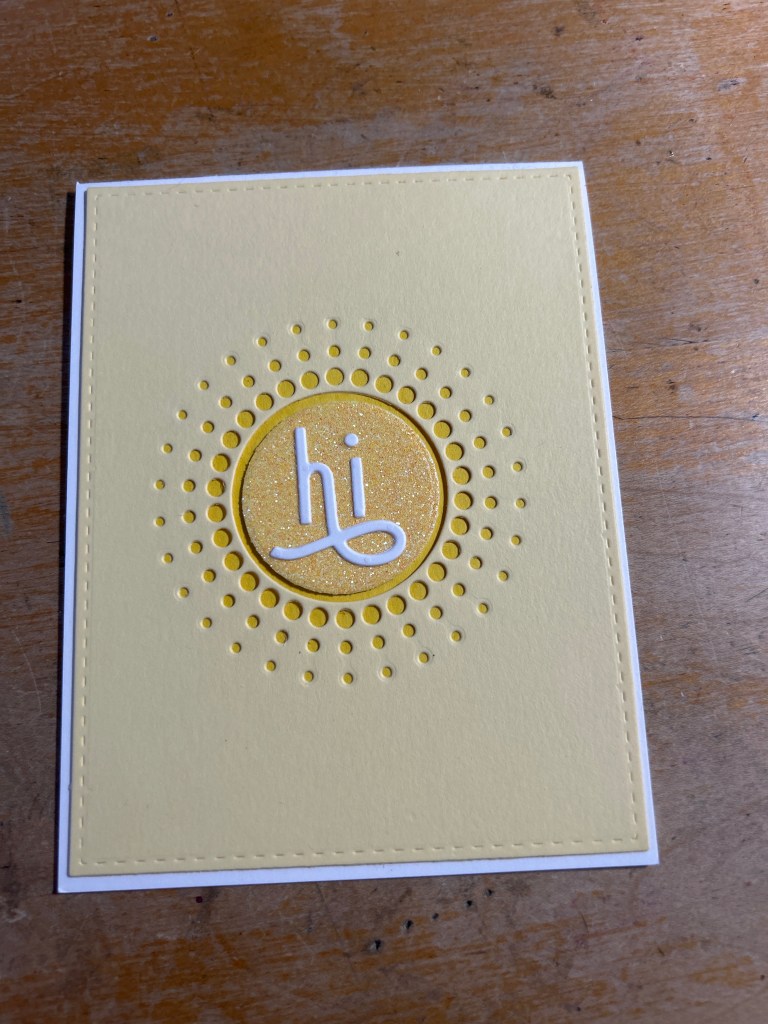
  • a cheerful yellow sunburst
  • a simple “hi”
  • a little sparkle

But everything was polite. Centered. Careful. The colors were pleasant, the design was tidy, and yet nothing invited the eye to linger. It was the kind of card you don’t dislike, but also don’t reach for.

And that’s usually the clue.

The first change: commitment

Instead of trying to tweak the card in place, I made a more decisive move and cut the entire focal element into a circle. Looking at it more critically, I realized the stitched panel was fighting with the fantastic sunburst die cut.

That single change gave the design a sense of confidence. Of course, it also meant die cutting through four layers of paper, which ultimately resulted in me carefully separating the top layers that did cut from the card base that very much did not.

But the result was worth it. The sunburst stopped behaving like a background detail and started acting like a focal point.

Sometimes a card doesn’t need more.
It needs a clearer decision.

The second change: contrast

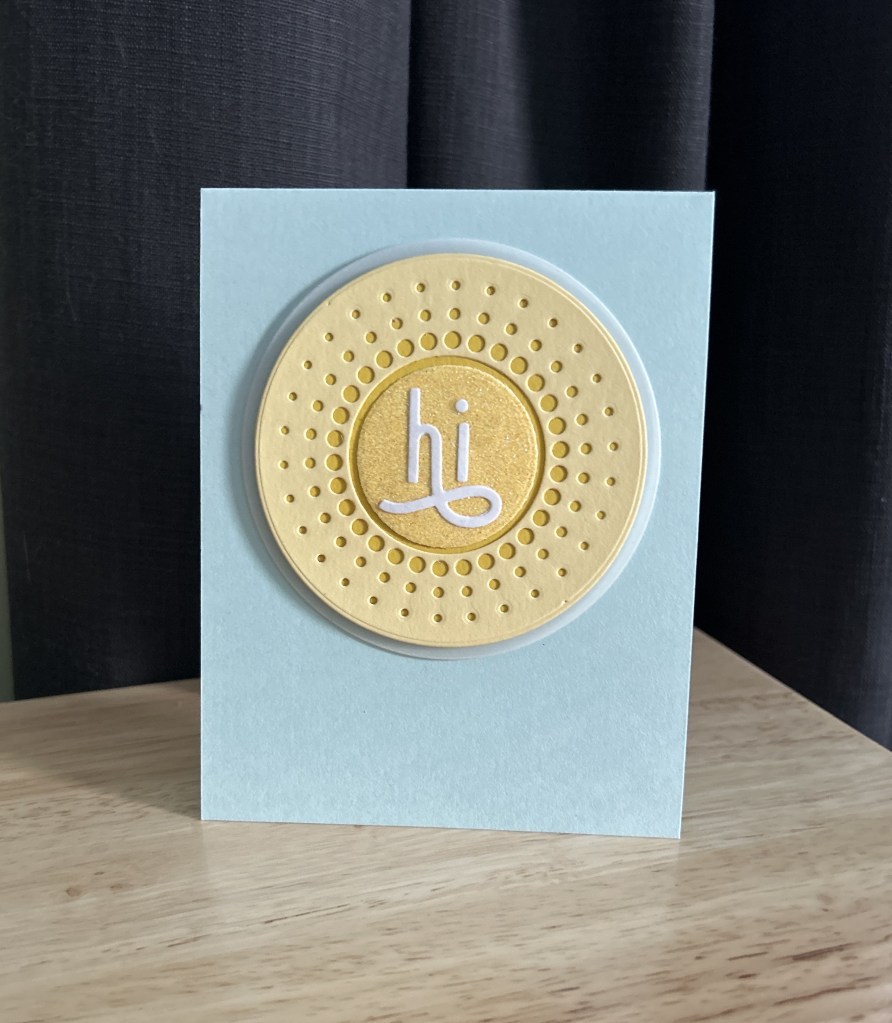
Next, I mounted the circle on a soft blue card base. This was the turning point. I was very consciously channeling a sky.

The warm yellow finally had something to push against, and the sparkle in the center suddenly felt intentional instead of decorative. The card shifted from neutral to expressive simply by letting warm and cool colors do their natural work.

The final change: air

The finishing touch was a thin vellum shadow behind the circle, with two smaller circle die cuts layered underneath to create a little space between the vellum and the card base.

That quiet layer made all the difference. It added separation without weight, softness without distraction. No extra embellishments, no added noise. Just a little breathing room so the focal element could sit comfortably on the card front.

This was the moment the card felt finished.

A note about the inside

The original card had “brighter days ahead” stamped on the inside.

It wasn’t wrong, but it felt a bit like making a promise I couldn’t fully keep. I’ve realized I don’t love sentiments that tell someone else how to feel or what’s coming next. It’s the same reason I shy away from cards that say “smile.” I don’t want to instruct or predict on someone else’s behalf.

What I can do is offer something that’s within my control.

So I’m redoing the inside sentiment as “sending sunshine.” It’s more personal and more active, and it mirrors exactly what the front is doing visually. It’s not a directive or a forecast, just a small offering.

Sometimes the fix isn’t just structural.
Sometimes it’s tonal.

Why I love doing this

Redoing unchosen cards teaches me more than starting from scratch:

  • I learn why something didn’t work
  • I practice restraint instead of accumulation
  • I use what I already have

It’s low-stakes, deeply satisfying, and surprisingly instructive. Often the card doesn’t need to be remade. It just needs to be listened to.

This one is finally ready to go back in circulation.
And the orphan pile just got a little smaller.


Supplies

  • Die: Memory Box Circle Burst
  • Sentiment: The Stamp Market “hi” word die (now discontinued)
  • Center circle: Yellow glitter cardstock (brand unknown, from stash)
  • Cardstock:
    • Yellow cardstock for the burst (Papertrey Ink or similar weight)
    • Soft blue card base (likely Spellbinders, exact color unknown)
  • Vellum: Heavyweight vellum from stash
  • Adhesives: Standard tape runner and liquid glue

A Long-Awaited Treat: My Just Desserts Series

Finally playing with a set I admired back in 2016 from Papertrey Ink.

There is a particular joy in finally getting your hands on something you’ve wanted for years. When Papertrey Ink released Just Desserts by Lizzie Jones in March 2016, I remember admiring it instantly: the clean lines, the playful toppings, the thoughtful layering. At the time it was outside my budget, and it slipped into that familiar category of “maybe someday.”

This month I found the set secondhand from another PTI fan, and it felt like a little message from my 2016 self: you get to play with this now. And now that it’s mine nearly a decade later, I’m discovering how well it fits the way I create today. Minimal, intentional, with small touches of sparkle and a few new tools I didn’t have back then. It turned into a fun Just Desserts Series full of experimentation and joy.

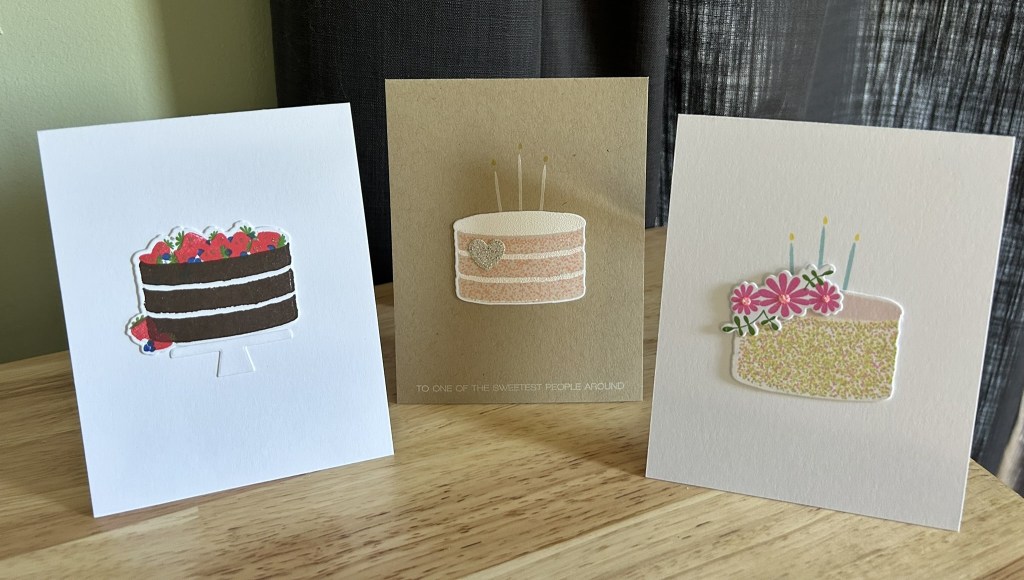
Here are the three cards in the order shown in the photo.

Card 1: Chocolate Berry Cake
This one is bold but still very clean. The chocolate layers add natural contrast, and the berries bring in color without making the card feel busy. I added a few soft sparkle dots with a Jelly Roll glitter pen, one of my favorite ways to finish a minimal card without overwhelming it.

The cake stand isn’t part of the Just Desserts set; I borrowed it from another Papertrey Ink set, I believe Imitation Basics. The scale isn’t perfect, but the embossed white-on-white look keeps it subtle, and it supports the design without drawing attention to itself.

Even with the deeper palette, the card stays minimal thanks to the open layout and calm spacing. It’s a nice reminder that bold color can still feel quiet and intentional.

Card 2: Kraft Cake With the Glitter Heart
This card became the heart of the series. I embossed the frosting with Brutus Monroe Alabaster Sparkle, which adds a fine shimmer that’s subtle but lovely in person. At first the cake felt a little ungrounded, and I tried adding a heart between the cake and the sentiment. That didn’t quite solve it.

The breakthrough came when I moved the heart onto the cake itself. Suddenly it felt intentional rather than corrective, and it became a focal point that tied everything together.

This one ended up modern, warm, and just a little bit sweet.

Card 3: Floral Sprinkle Cake
For this one, I wanted the stamped image itself to be the focal point. Lizzie’s three-layer sprinkle stamp is so well designed, and I used pink, soft green, and yellow inks to build those layers. The look is cheerful and light, and it doesn’t need much else. I added tiny drops of Stickles to the flower centers for a bit of sparkle. Each card in this series has some hint of shimmer, and here it feels especially playful.

What This Series Reminded Me Of
Working with this set that I admired years ago reminded me of a few things:

• Delayed gratification can be truly delightful.
• Minimal layouts let the designs shine.
• I don’t always need something new to feel inspired. Using what I have, or finding something secondhand, invites discovery.
• Older stamps don’t limit me. They give me room to explore.
• A touch of sparkle goes a long way.

This set was worth the wait.

Snowfall Collection

I was recently asked to make a set of cards for a fundraiser auction for our local community center, which absolutely tickled me. Sometimes you don’t really know if your work is good enough, or if what you’re making resonates beyond your craft table. So the request felt like a small, affirming nudge to keep going.

Lately, I’ve been experimenting with sets of cards — not identical designs, but related ones that explore a single idea from different angles. It’s less about telling a story and more about finding new ways to use what I already have on hand. Still, there’s a creative challenge in building cohesion across several pieces while letting each one stand on its own.

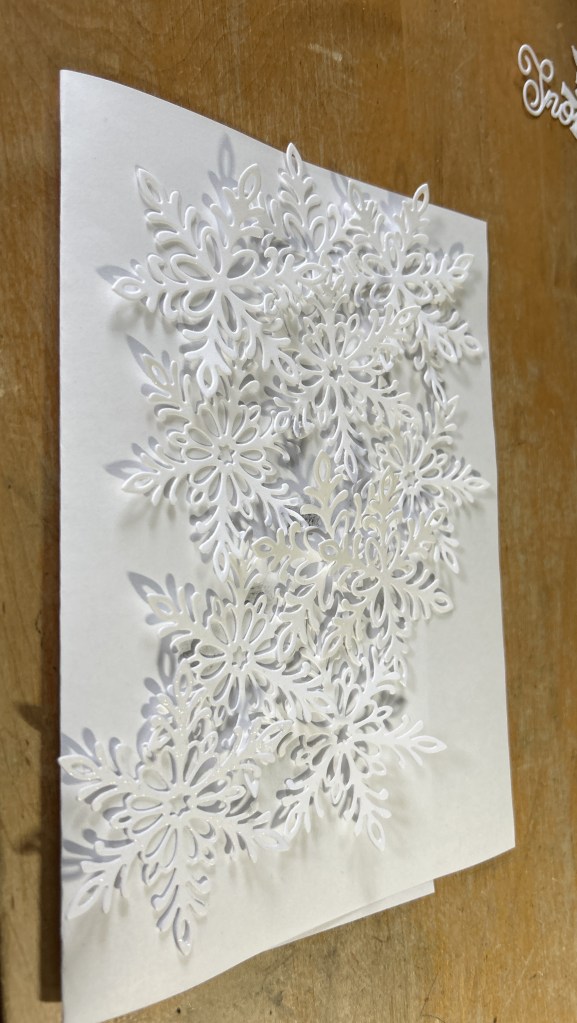
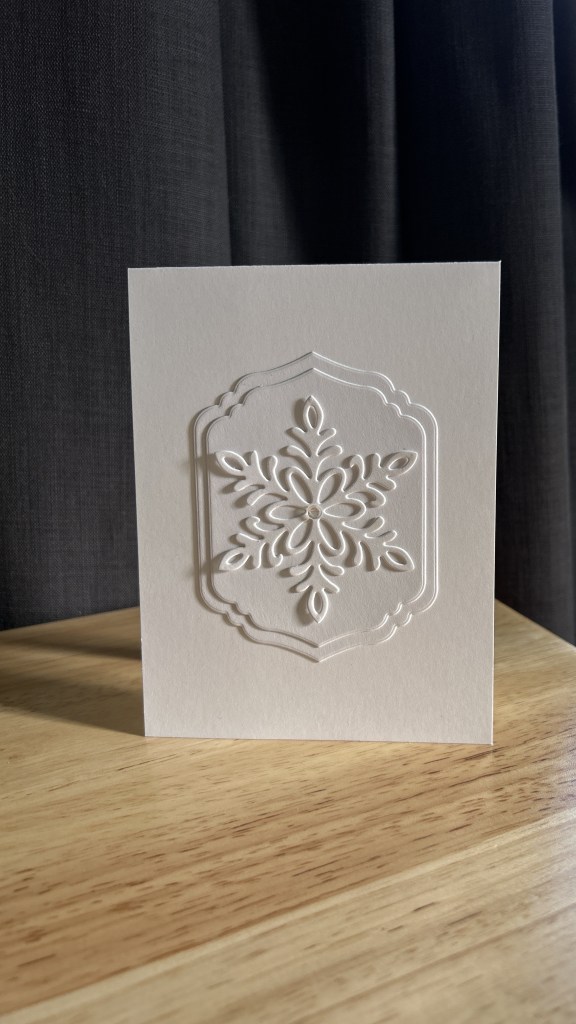
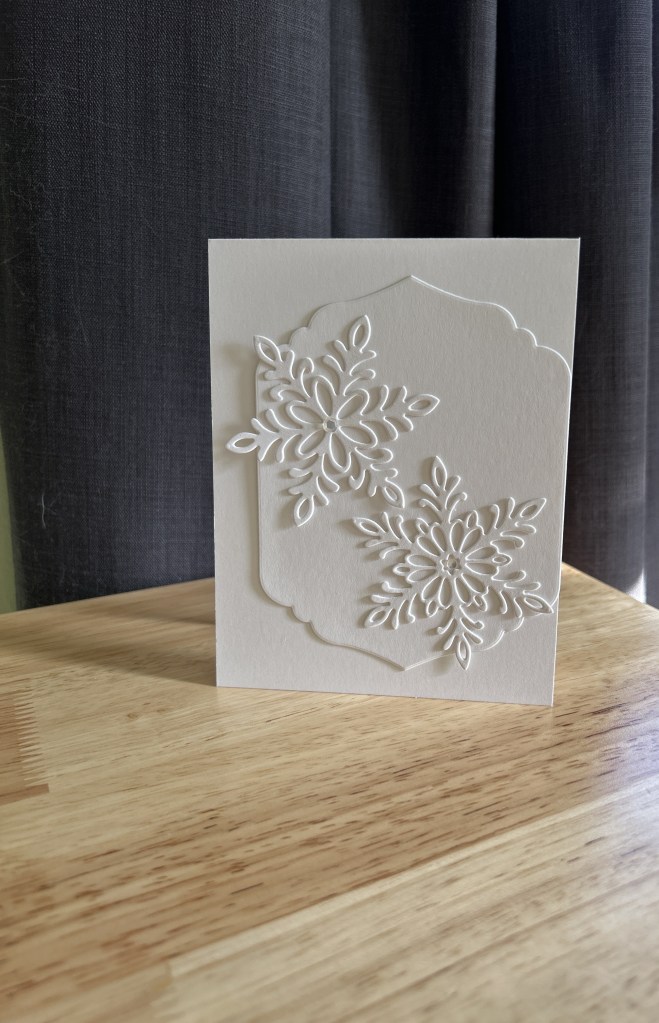
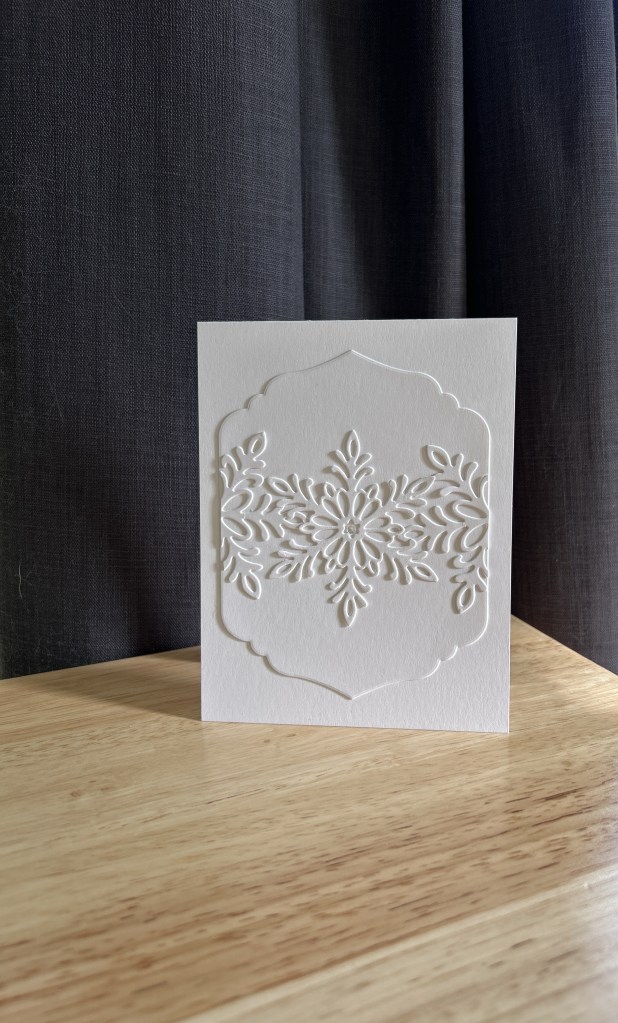
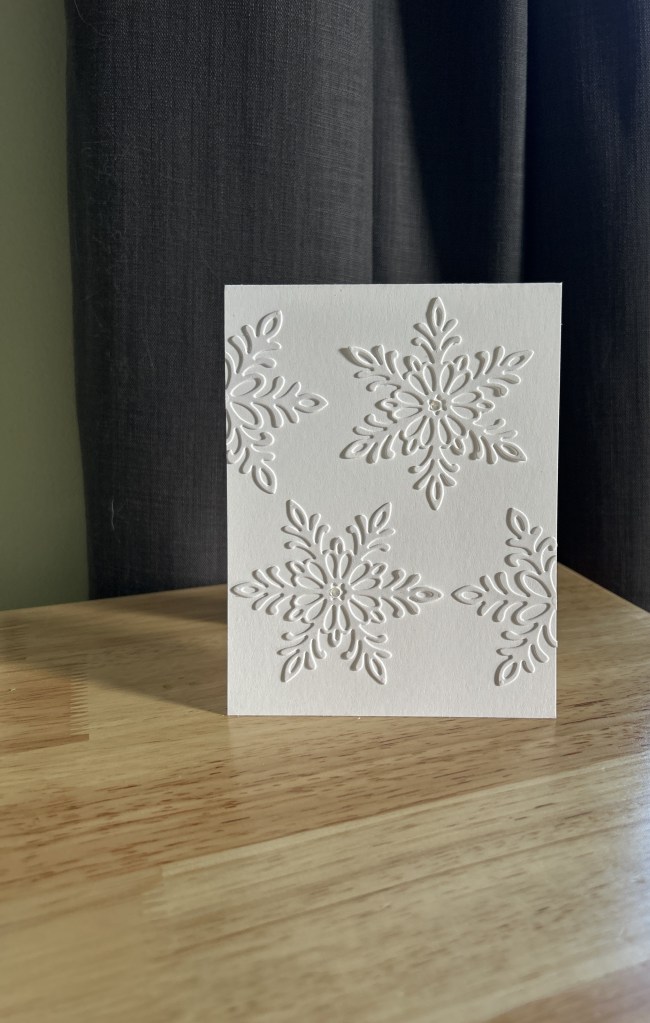
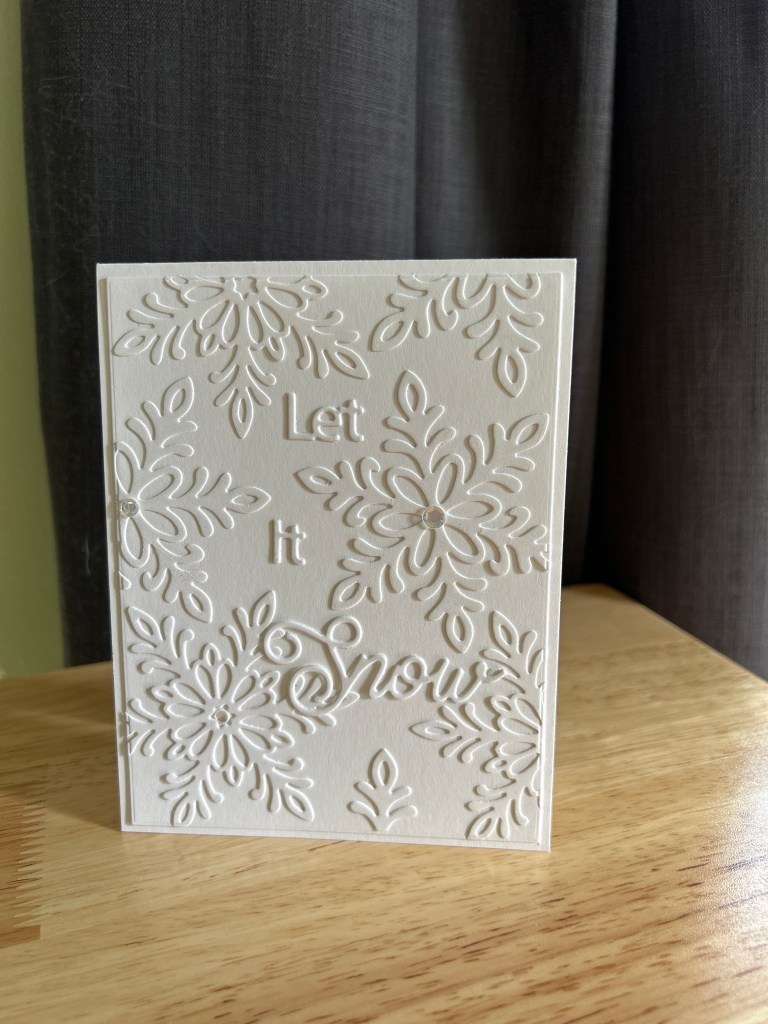
For this winter set, the framework was snowflakes. I decided to make five cards, beginning with one snowflake and adding another with each design — one, two, three, four, five — a gentle progression that builds like a snowfall.

I kept everything white on white so the focus would be on texture and light. I cut a flurry of snowflakes using the Lacey Snowflakes dies from The Stamp Market, sprayed them with a soft shimmer, and added clear sequins to the centers where a little sparkle felt right. The snowflakes are both delicate and substantial, the kind of classic design that never gets old. (And honestly, you can never have too many snowflake dies.) I paired them with the Modern Teardrops Frames from Simon Says Stamp, which added a quiet sense of structure to balance the soft shapes of the flakes.

Inside, I used sentiments from a treasured older Poppystamps Wintertime Sentiments set — thoughtful winter messages like Warm Winter Wishes and Time to Sparkle. They suit the quiet simplicity of the designs perfectly.

Here’s to more snowflakes, more small acts of making, and the quiet joy they bring.

The Scraps That Waited All Year

The Scraps That Waited All Year

Some scraps are too small to be useful, and too full of potential to throw away.

I keep two scrap piles in my craft room. One for the bigger pieces that can become backgrounds or layers. And one for the tiny scraps, the kind most people would sweep into the bin. Mine live in a small container near my desk, a jumble of cardstock corners, partial die cuts, and skinny slivers of color.

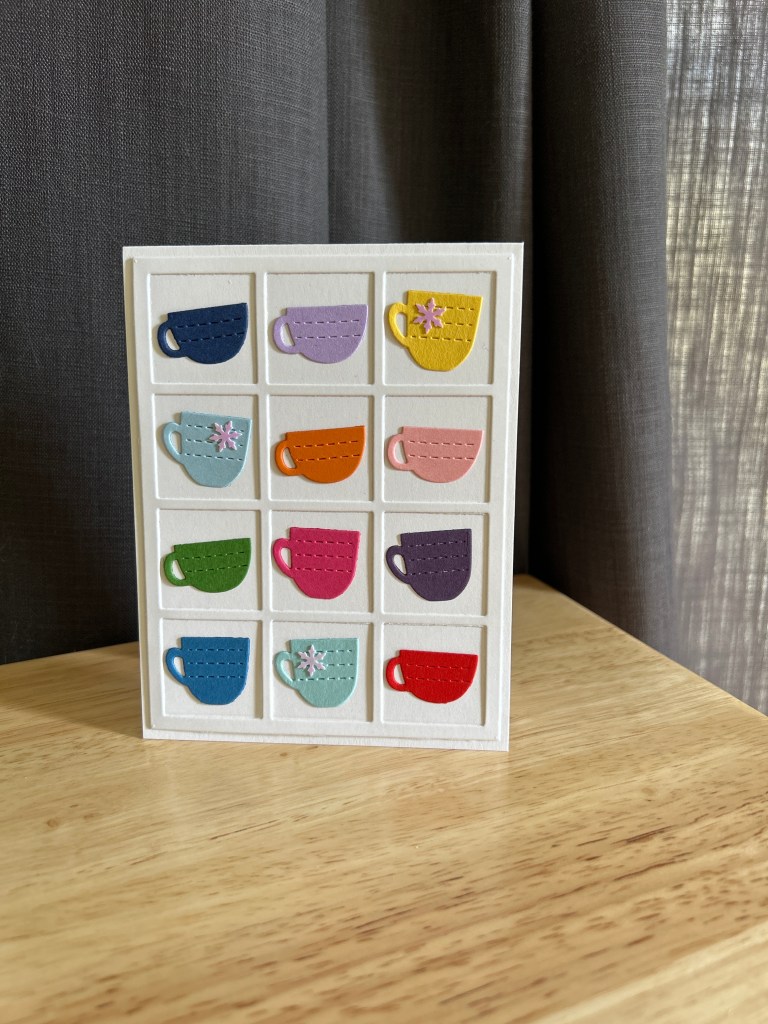
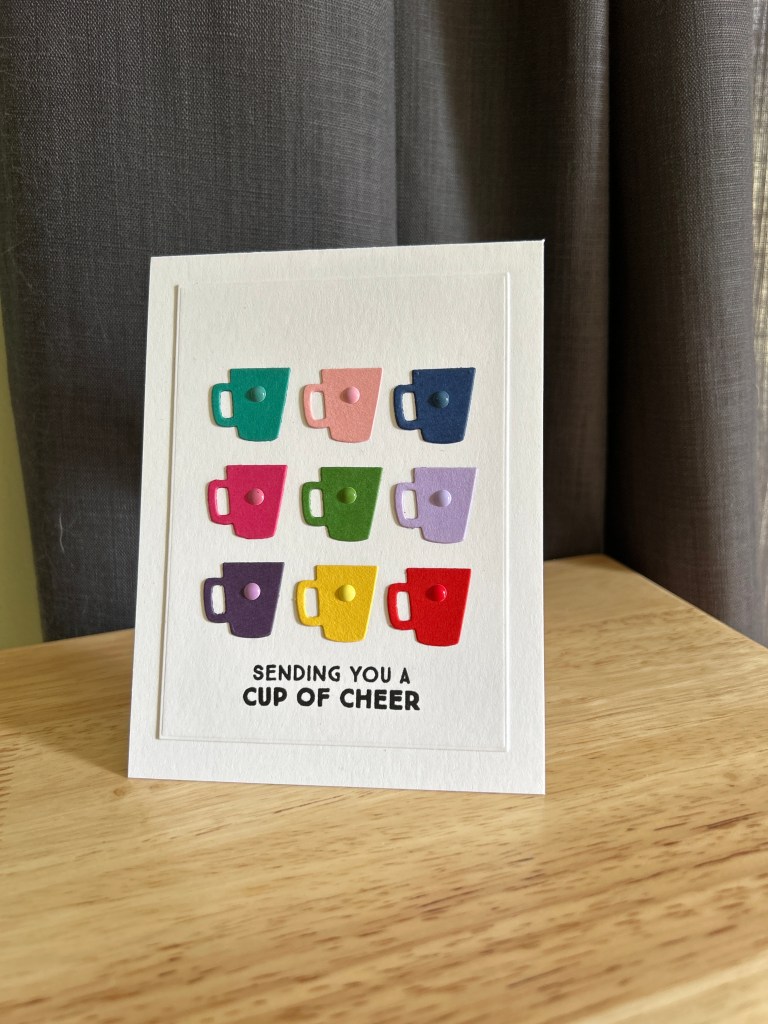
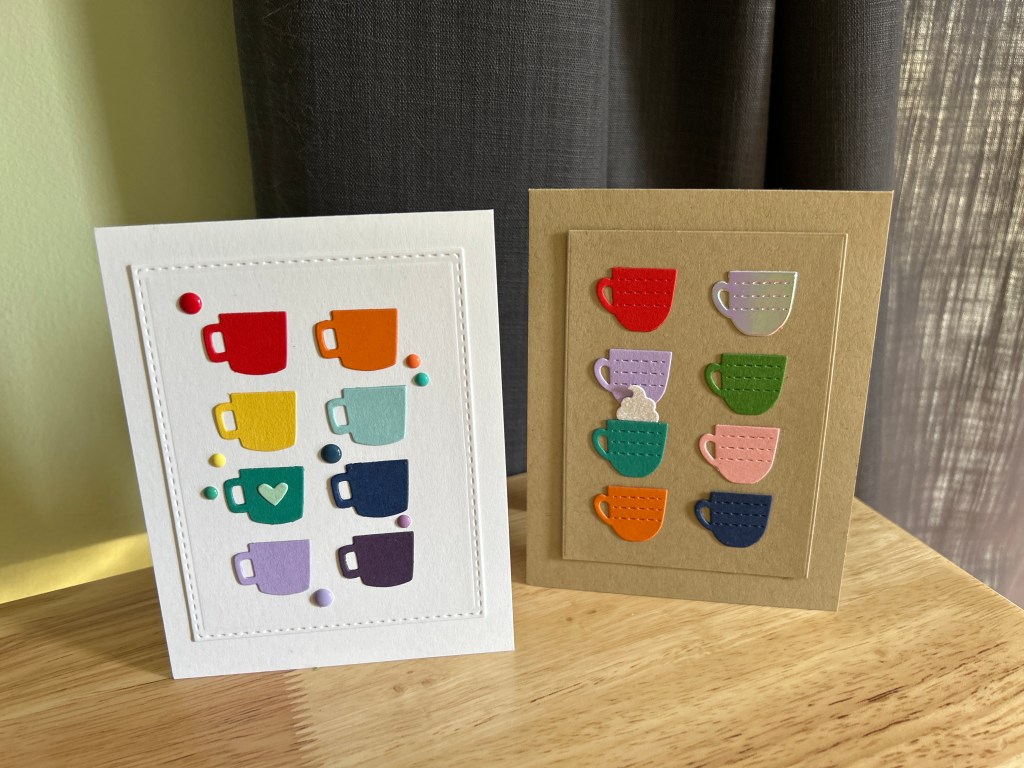
A year and a half ago, on vacation in Maine, I packed my tiny scrap stash and a handful of small dies. No stamps, no adhesives, no embellishments, just my die cutting machine and the quiet rhythm of cutting shapes. One of those dies was Newton’s Nook’s mug set. I cut out mugs to my heart’s content, challenging myself to see how many I could get from each piece of leftover scrap. They were bright and mismatched and delightful, and then I tucked them away in one of those plastic gum containers I nicked from my son, thinking I’d use them someday.

Someday turned out to be now.

This week, I pulled out those tiny cups and challenged myself to make a series of cards, all built from scraps that had been waiting more than a year. I started with a grid pattern because it felt natural, neat rows of mugs, small pieces coming together in harmony. But then came the real creative work, figuring out how to make each card feel distinct.

That’s where May Calico helped. I’ve started recording the ways I use AI to learn my craft, and this project felt like a good example. We talked about balance and repetition, how to shift a sentiment slightly off-center, and how to resist my usual impulse to add more. The constant reminder, less is more, helped me hold back when I wanted to keep layering. Sometimes all a card needs is one heart, or a quiet shimmer of foil, to feel complete. Each card stayed simple, but none felt the same.

What I love most is how these little mugs, once cast offs, now look intentional. They remind me that creativity often begins with what’s left over, and that even the tiniest scraps can hold a story if I give them time.